



Collector car investments demand real diligence—no less than any other asset class. High-net-worth collectors face unique headaches in verifying authenticity, condition, and long-term value.
Unlike stocks or bonds, there’s no standardized reporting for collector cars. That makes it tricky to confirm claims in listings, and frankly, it’s a pain point that never goes away.
Spotting red flags in collector car listings is critical for protecting capital and avoiding expensive errors. The market’s ballooned in recent years, with certain segments showing steady appreciation. But with growth comes opportunists—some sellers misrepresent vehicles or hide issues that can wreck returns.
This review covers five key red flags that signal serious risk in collector car listings. Each one points to an area where you need to verify before moving any money. Informed investment decisions depend on understanding both the upside and the specific risks that can undermine a car’s value.
1) Is the Vehicle History Report Complete and Credible?
If a collector car lacks full documentation, your capital is at risk. For high-net-worth investors, provenance is a core driver of value.
An incomplete history report suggests possible title issues, hidden accidents, or ownership gaps. These can cut auction value by 20-40%.
Professional buyers always verify the ownership chain, service records, and accident history before putting money down. Gaps or missing info in vehicle history reports weaken the investment case. For example, a 1967 Porsche 911S with full docs trades at $180,000–$220,000; the same car with spotty records might fetch just $140,000.
Missing service records add uncertainty. Collectors pay up for cars with documented maintenance and professional restoration. If a listing says “well maintained” without proof, that’s a red flag—there’s no way to verify the car’s condition history.
Title transfers are crucial for investment-grade cars. Every ownership change should be in the history report with dates, locations, and mileage. Gaps point to possible salvage history or mechanical failures the seller doesn’t want you to see.
Incomplete documentation kills exit liquidity. Auction houses require full provenance for high-value lots. Without it, buyer interest drops, and so does the final price.
Sellers with nothing to hide provide all documentation up front. When red flags pop up in history reports, demand more documentation or adjust your valuation. You wouldn’t put $300,000 into any other alternative asset without this kind of diligence. Why do it here?
2) Has the Car Been Restored in Ways That Hurt Originality?
Major restoration work usually means a car sells for less than a truly original example. Paint that’s too perfect? Could be a respray that erased factory marks.
Check door jambs, engine bays, and trunks for overspray or mismatched colors. These are telltale signs of heavy restoration.
Replaced interior parts lower the originality premium. Original seats, dash, and carpet are worth more than even top-quality reproductions. Date codes and stitching patterns can help verify authenticity.
Extensive bodywork often shows up in rust-prone or accident-damaged areas. Panel gaps that don’t match factory specs are a warning. Measuring metal thickness can reveal filler or non-original panels.
Restoration’s impact on value comes down to quality and documentation. If there’s no record of what was done, buyers can’t tell what’s original. That uncertainty means lower prices and less confidence.
Original engine components matter. “Numbers-matching” drivetrains get big premiums over cars with replacement engines or transmissions. Check casting numbers and stampings against factory records.
Heavy modifications passed off as restoration can ruin collectibility. Modern upgrades might improve driving, but they kill historical value. Spotting poor restoration takes careful inspection. If you skip this, you risk tying up capital in cars that won’t appreciate with the market.

3) Is the Ownership Documentation Consistent and Complete?
A collector car without clean paperwork is one of the biggest risks out there. Missing titles or gaps in ownership can cut value by 30-50% versus well-documented cars.
The title is the most important document. A clean title proves ownership and allows resale. Salvage or rebuilt titles show prior damage or insurance claims—permanent red flags for investors.
Imported cars can have title issues that take forever to fix. Gaps in ownership history raise doubts about what happened during those periods—damage, bad repairs, or legal trouble?
Investment memos in private equity require strong documentation, and the same goes for six-figure collector cars.
Service records and maintenance logs add verification. They show care and confirm mileage. Factory build sheets and window stickers prove original specs. Without these, you have to question the car’s story.
Smart investors verify all paperwork before sending money. They check VINs against factory records and compare title stamps across states. If a seller can’t produce full documentation, it’s usually best to walk away.
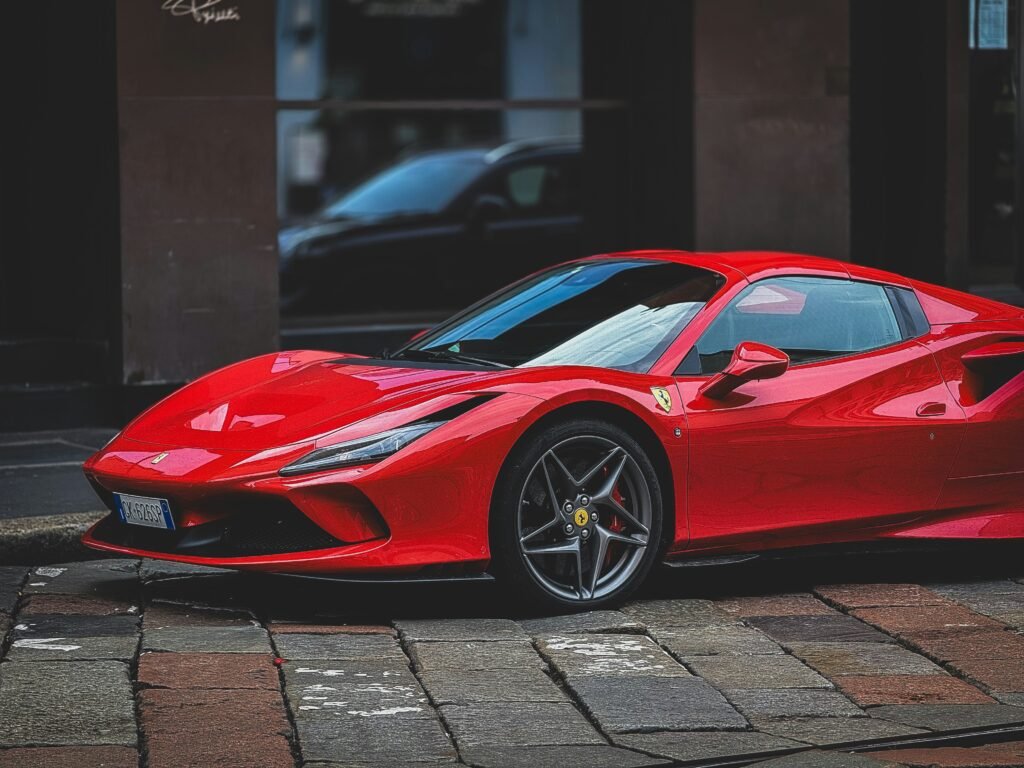
A $200,000 Ferrari with sketchy paperwork is almost unsellable at full value. Auction houses won’t touch cars without proper titles, and private buyers want big discounts to offset risk. If you can’t prove clean ownership, the investment case falls apart.
4) Do the Photos Hide Details or Show Damage in Bad Lighting?
Professional sellers use well-lit photos from every angle. When key areas are in shadow or shot at odd angles, it’s fair to ask what’s being hidden.
Dark or backlit photos make it tough to see rust, paint flaws, or damage. A car needing $150,000 in restoration can look fine in a dim garage but terrible under proper lights.
Strategic cropping is another problem. If you never see the driver’s door jamb, floor pans, or engine bay, that’s usually not by accident. These spots often hide expensive issues.
Distance shots that keep you away from the paint surface are a red flag. Close-ups reveal orange peel, overspray, and poor color matching. Wide-angle photos from across the room? Not helpful.
Blurry images are also suspicious. Modern phones take sharp pics, so if VIN plates or known problem areas are always out of focus, it may be intentional.
Investors should ask for more photos before traveling to see a car. Sellers with nothing to hide will usually send extra images within a day. If not, there’s probably something they don’t want you to see.
Professional photos cost under $500. Any serious seller will invest in proper documentation for a six-figure car. Photos in varied lighting tell the whole story.
5) Is the Price Suspiciously Low Compared to Market Value?
A collector car priced way below recent sales almost always signals a problem. If a Ferrari 308 GTS is listed at $45,000 when clean examples fetch $75,000–$90,000, you need to know why.
Big price gaps usually mean undisclosed damage, missing documentation, or mechanical problems that could cost tens of thousands to fix. A $25,000 Porsche 911 SC in a $55,000 market might have a salvage title, odometer rollback, or hidden rust.
Some sellers drop prices because they can’t prove provenance. A matching-numbers E-Type Jaguar worth $120,000 with full docs might only get $75,000 without proof of originality. Lack of paperwork makes resale tough for serious collectors.
Compare any asking price to recent auction results and dealer listings for similar cars. If it’s more than 20% below average, be skeptical. Sometimes sellers are just in a hurry, but that doesn’t mean you should skip due diligence.
Smart investors get a pre-purchase inspection from a marque expert before chasing below-market deals. That might cost $500–$1,500, but it can save you from $20,000 in surprise repairs. Investment value isn’t the same as market price. A low ask isn’t always a bargain if the car’s true condition is poor.
What Are the Key Investment Considerations for Collector Cars?
Collector car investing is about analyzing value drivers, understanding liquidity, and spotting deal-breakers before you commit capital.
Which Value Drivers Matter Most?
Provenance documentation is the main value multiplier. Cars with full ownership history and factory build sheets sell for 30-50% more than similar cars without docs.
Matching numbers status is essential. Original engine, transmission, and rear axle with correct stampings usually mean a 40-60% value premium over cars with replacements.
Restoration quality is huge for resale. Concours-level restorations by known shops cost $200,000–$500,000 but protect value. Budget restorations under $50,000 often destroy equity. Unrestored survivors in great shape are outperforming restored cars at auction these days.
Competition history creates a separate tier. Documented race history can add 100-300% to value. Unsupported racing claims? Worth nothing.
How Liquid Is the Collector Car Market?
Auction sell-through rates show true demand. Cars with 70%+ rates at major auctions have healthy markets. Sub-50% means weak demand or overpriced inventory.
Transaction velocity matters. Top brands like Ferrari and Porsche typically sell in 90–120 days at fair prices. Rarer models can sit for 6–12 months, which is a real liquidity risk if the market turns.
Geographic demand concentration affects exit options. Cars with buyers in the US, Europe, and Asia are easier to move. Domestic-only models often trade at 20–30% discounts if you need to sell fast.
Dealer inventory turnover is a useful signal. Cars moving through specialist dealers in under 6 months show solid demand. Inventory sitting over a year suggests overpricing or fading interest.
| Factor | Impact on Value | Typical Premium/Discount |
|---|---|---|
| Complete Provenance | Major Value Driver | +30-50% |
| Matching Numbers | Investment-Grade Status | +40-60% |
| Concours Restoration | Protects/Boosts Value | +20-40% |
| Salvage/Branded Title | Permanent Red Flag | -30-50% |
| Documented Race History | Creates Unique Tier | +100-300% |
Actionable Insights for Collectors and Automotive Investors


For high-net-worth collectors, skipping due diligence is a costly mistake. Every red flag—missing docs, sketchy photos, lowball pricing—should trigger more questions, not less. The best investments are transparent, well-documented, and have clear market demand.
If a deal feels too good or too vague, trust your instincts and walk away. There’s always another car, but lost capital is tough to recover.
My take? The market rewards patience, documentation, and a willingness to pay for independent verification. Chasing bargains with red flags is not a sustainable strategy. Focus on quality, provenance, and liquidity, and you’ll outperform the crowd in the long run.
Mitigating Key Risks
Mechanical inspection costs for pre-purchase evaluation range from $500 for basic checks to over $5,000 for a full teardown. Skipping this step often leads to $50,000-150,000 in hidden repair costs—a risk I see too many collectors ignore.
Title verification is non-negotiable. State DMV records, Carfax, and international title searches (usually $200-800) are critical for uncovering salvage histories, odometer fraud, or ownership disputes that can wipe out six-figure investments.
Market timing risk is real. Collector cars typically require a 5-7 year hold for optimal returns; if you need liquidity in under 3 years, expect to face market corrections that can shave off 15-25% of value.
Regulatory exposure varies by model. Changes in emissions exemptions, import rules, or safety standards can slash values by 40-60% for non-compliant vehicles. It’s a moving target that’s easy to underestimate until it hits your portfolio.
What’s the Framework for Collector Car Due Diligence?
Collectors and automotive investors need strict verification protocols before buying. The two main pillars: confirm the car’s documented history and understand its price trajectory.
How Do You Verify Provenance and Authenticity?
Documentation is everything. A full ownership history, from factory delivery to present, protects against fraud and confirms matching numbers. I won’t even consider a car without original build sheets, invoices, and registration docs in hand.
Matching numbers require a professional to inspect. Engine, transmission, differential, and body stamps must all align with factory records. Just one non-matching part can knock 20-40% off the value.
Third-party authentication is a must for high-value cars. Marque specialists spot details counterfeiters miss—paint thickness, metal composition, and fiber analysis can reveal hidden restoration or modifications.
Key Documentation Checklist:
- Factory build sheet or window sticker
- Original dealer invoice and delivery records
- Complete maintenance history with receipts
- Previous sale invoices showing price progression
- Professional appraisal within the last 12 months
Import documents are critical for European and Japanese cars in the U.S. Gray market imports from the 1980s often lack proper certification, leading to legal headaches that can torpedo value.
How Should Investors Analyze Historical Price Data?
Price history sets the tone for valuation. Auction results from major houses provide comparables. A car with steady 10-year appreciation shows real collector demand.
Transaction databases (Hagerty, Sports Car Market) track auction and private sales. I always check at least five comparable sales from the last 24 months before making an offer.
Sharp price spikes are a red flag for speculative bubbles. Cars that double in 18 months usually correct by 30% or more. Sustainable growth is rarely above 8-12% per year, unless it’s a newly discovered rarity.
Condition-adjusted pricing is vital. A concours-restored car can bring 50% more than a driver-quality example. Collectible cars lack liquidity, so historical sales velocity matters a lot.
Regional price differences impact value. European buyers pay more for right-hand-drive British cars, while U.S. collectors want domestic specs. Currency swings sometimes create short-lived arbitrage opportunities.
| Risk Factor | Potential Financial Impact | Mitigation Cost |
|---|---|---|
| Skipped Inspection | $50,000–$150,000 (repairs) | $500–$5,000 |
| Title Issues | Total loss of value | $200–$800 |
| Market Correction | 15–25% value drop | N/A |
| Regulatory Change | 40–60% value drop | Varies |
What’s my take on all this?
Honestly, I wouldn’t risk serious capital in collector cars without these tools. The market’s too opaque otherwise. If you’re a high net worth buyer or just passionate about beautiful machines, think of these resources as your due diligence kit. Skipping them isn’t just risky—it’s reckless.
What’s actionable right now?
If you’re considering an acquisition, check recent comps and liquidity before you wire any funds. Rising interest rates? Maybe hold off unless it’s a truly rare opportunity. And never skip the provenance research—red flags are everywhere, especially at the higher end of the market.
Frequently Asked Questions
Investment decisions in collector cars hinge on market dynamics, documentation, and valuation standards. Understanding these basics helps collectors and high net worth investors avoid red flags that can destroy value.
What Determines the Investment Value of a Collector Car?
Three things: production scarcity, historical significance, and complete provenance. Under 1,000 units is my usual cutoff for real scarcity. Original specs and full ownership history drive premiums—extensive restoration can cut originality value by 15-30%.
Market demand within a niche matters. Racing pedigree, celebrity ownership, or breakthrough engineering create price floors that help resist downturns. But don’t underestimate how quickly tastes can shift.
Which Collector Cars Appreciated Most in the Last Five Years?
Pre-war European marques and 1980s-90s Japanese performance cars led the pack, 2021-2026. Air-cooled Porsche 911s saw 45-60% gains. Clean Toyota Supras and Nissan GT-Rs doubled if unmodified. Ferrari 250s still managed 8-12% annual growth, even from high starting points.
Classic American muscle was mixed. Hemi Mopars gained 30-40%, but common small-block Chevrolets stagnated or fell 5-10%—too much supply, not enough demand.
What Are the Critical Factors to Evaluate Before Investing?
Documentation is first. Continuous ownership records, maintenance logs, factory build sheets—if anything’s missing, I walk. Gaps in history almost always mean title issues or undisclosed damage, which can kill 40-50% of value.
Physical inspection is next. Matching numbers on engine, transmission, and chassis matter. Non-original parts have to be disclosed; replacement drivetrains typically mean a 25-35% discount, even with period-correct components.
Be wary of photos that hide key areas or show damage in poor lighting. Professional inspections ($500-2,000) are cheap insurance for six-figure cars.
How Can High Net Worth Individuals Diversify with Collector Cars?
Collector cars should make up 5-10% of your alternative assets. Spread risk across segments: pre-war, post-war, modern supercars, and up-and-coming models from the 1990s-2000s. This balances multiple appreciation curves and limits exposure to one market crash.
Geographic diversification helps with storage and sale logistics. Storing cars in tax-friendly areas, near major auction houses, keeps costs down. Insurance and climate-controlled storage usually run 2-3% of vehicle value per year.
When Should an Investor Sell for Maximum Return?
Watch for market peaks: price jumps over 20% annually, more auction listings for similar cars, and mainstream media hype. These are signs of speculation—often the best time to exit before a correction.
Sell if restoration costs exceed 15% of current market value, or if better investment opportunities come up. Major mechanical failures needing $50,000+ in repairs usually mean it’s time to move on. Tax-wise, holding for over a year gets you long-term capital gains in most places.
What resources or tools are essential for analyzing the collector car market?
To get a real handle on the collector car market, you need reliable data. Auction result databases like Hagerty Price Guide, Sports Car Market, and Bonhams auction archives are the backbone here. They track transaction data over decades, across various condition grades.
Expect to pay between $50 and $300 a year for these subscriptions. Most serious collectors and automotive investors I know consider this a no-brainer—without historical comps, you’re flying blind on valuation.
Marque-specific registries are another key tool. These track production numbers, survival rates, and changes in ownership for many collectible models. For high net worth collectors, this granularity is non-negotiable if you’re trying to avoid red flags like fake provenance or undisclosed restoration.
If you want a valuation that stands up in court or with your insurer, you’ll want a professional appraiser. Certified appraisers—think American Society of Appraisers or International Society of Appraisers—usually charge $500 to $1,500 per car. That’s not pocket change, but it’s essential for insurance, estate planning, or even just peace of mind.
Market timing is tricky. You have to keep an eye on interest rate trends. When financing rates go above 7%, we typically see discretionary collector car purchases drop by 15-25% across most categories. That’s a significant headwind for sellers, and something I always factor in before making a move.
Which financial data points matter most for collectors and investors?
The most important numbers are recent sale prices for similar models, long-term price trends, and transaction volumes. I also look at liquidity—how many days a car sits on the market before selling. If a model’s average time-to-sale jumps, that’s a red flag.
| Tool/Resource | Cost | Key Data Provided |
|---|---|---|
| Hagerty Price Guide | $50-200/year | Historical auction results, condition grades |
| Marque Registries | Varies | Production/survival rates, provenance |
| Certified Appraiser | $500-1,500/valuation | Defensible market value, insurance support |