
Buying limited-production hypercars and flipping them for massive markups is now a defining tension in the world of alternative assets. High-net-worth individuals who resell cars like the Ferrari LaFerrari or Pagani Huayra for two or three times MSRP aren’t just chasing profits—they’re reshaping the collector car landscape.
These flips can seriously restrict future access to new models and do real damage to reputations within tight-knit collector circles. If you’re thinking about hypercars as part of a diversified portfolio, these ethical and practical issues aren’t abstract—they directly affect your relationship capital and future deal flow.
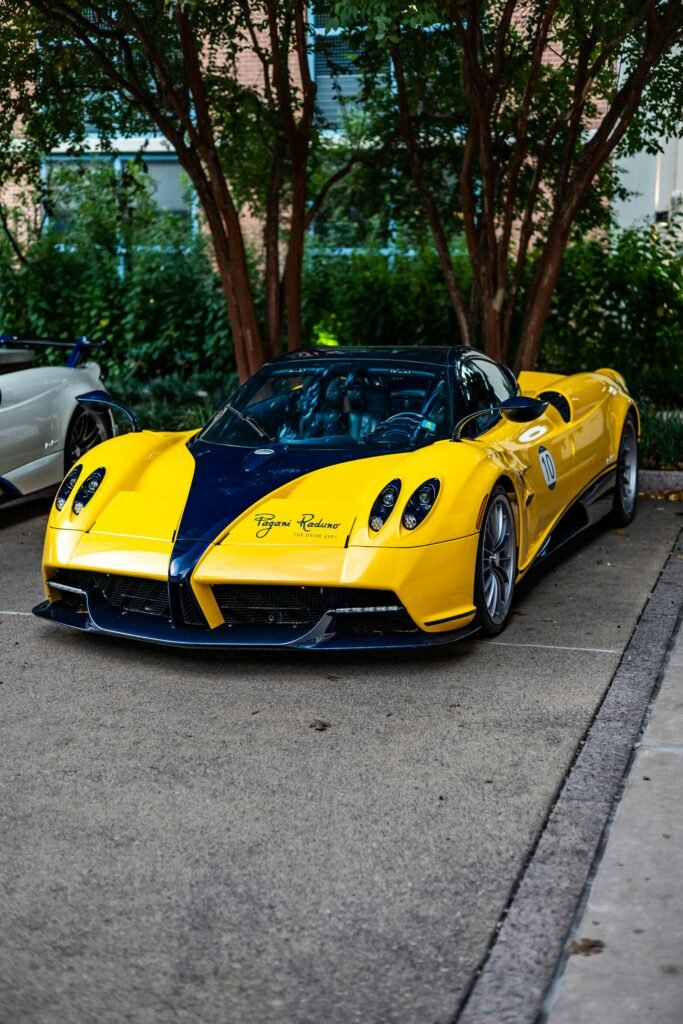
The secondary market for ultra-rare supercars can be wild. Take the Pagani Huayra “730S Edition”: originally $2 million, it reappeared weeks later listed at $5.5 million. LaFerraris have gone from $1.4 million to $5 million almost overnight.
Manufacturers are fighting back with tighter allocation controls. Informal blacklists are now a reality—get caught flipping, and you might never see another allocation. What looks like a quick profit can actually shut you out of the next decade’s best opportunities.
Investors with $500,000 to $5 million often weigh hypercars against more traditional alternatives—private equity, commercial real estate, that sort of thing. But here’s the catch: hypercar investing is relationship-based. Access to appreciating vehicles depends on your standing with the brand, not just your checkbook.
Standard car flipping—think $5,000 to $50,000 per deal—doesn’t prepare you for the complications here. Hypercar flipping can burn bridges that matter far more than the immediate gain. Standard financial analysis just doesn’t capture the full picture.
What Are the Real Risks and Rewards of Flipping Hypercars?

Quick flips can net 150-290% returns in weeks. But manufacturers like Ferrari, Porsche, and Pagani keep confidential blacklists. If you’re caught, you’re banned from future allocations—potentially for life.
The premium for ultra-rare hypercars is huge: $3-4 million above MSRP is common. Sure, that’s instant liquidity, but it comes at the cost of being shut out from future releases. The cost of a LaFerrari that’s moved quickly? A shot at the next allocation, gone.
Brand relationship capital isn’t just a nice phrase—it’s quantifiable. Collectors who play the long game get exclusive invites to new models. That’s millions of dollars in future purchasing power, and it’s only available to those with the right ownership history.
In my view, if you’re a serious investor, you need to plan on holding for at least 3-5 years. The opportunity cost of losing allocation rights to future $2-3 million cars is often much higher than the $1-2 million you might make on a single flip.
Tax treatment is another factor. Flip quickly and you’re looking at ordinary income rates up to 37%. Hold longer and you might qualify for capital gains at 20%, plus the 3.8% NIIT. That’s a 40-50% difference in tax liability on the same gross profit. It adds up.
For most, collector vehicles should be no more than 5-10% of your investable assets. Illiquidity, storage, and insurance (2-4% annually) eat into returns more than many realize.
| Manufacturer | Typical Holding Expectation | Documented Consequence of Flipping |
|---|---|---|
| Ferrari | 12-24 months minimum | Permanent allocation exclusion |
| Porsche | 6-12 months minimum | Reduced priority for future models |
| McLaren | 6-18 months minimum | Case-by-case review |
| Pagani | No formal policy | Informal blacklisting reported |
Is Hypercar Flipping Worth the Long-Term Cost?
The hypercar market’s become a speculative playground. Fast resales generate eye-watering profits, but the consequences are real and lasting. Manufacturers don’t just notice—they act.
Quick flips of allocation-restricted cars—think Ferrari, Porsche, McLaren—can yield 50-150% in 12-24 months. But these transactions leave a permanent record. Brands blacklist known flippers, closing the door to the most lucrative collector car opportunities.
One premature sale of a $500,000 limited-edition car can mean losing access to $2-5 million in future releases over the next decade. For investors with $500,000-$5,000,000 in play, that’s a serious portfolio constraint.
Wealth managers now approach these cars with a structured, almost clinical eye. They look at opportunity cost, manufacturer enforcement, and strategies that keep both liquidity and brand relationships intact. In my experience, the best returns come from patience, not speculation.
How Does Hypercar Flipping Actually Work?
Flipping in this world isn’t just about quick profits. Allocation policies and resale practices directly impact your eligibility for future inventory. Manufacturers are watching—closely.
What Exactly Is Hypercar Flipping?
Hypercar flipping means buying a limited-production vehicle with the intent to resell at a premium—often immediately. This isn’t the old-school collector car play, where you hold for years and watch appreciation build. These cars hit the secondary market within weeks or months of delivery.
It’s all about scarcity. With production runs of 500 to 1,500 units (sometimes less), demand almost always outstrips supply. That’s why you see a Pagani Zonda for sale at $5.5 million after a $2 million MSRP, or a Ferrari LaFerrari listed at $5 million right after allocation.
Long-term collectors play a different game. They’re after appreciation and provenance, not a fast buck. Flipping hypercars is about market timing and exploiting allocation access, not building value over time.
How Do Brands Control Access?
Manufacturers like Ferrari and Porsche keep detailed client databases. They track who buys, who sells, and how long you keep your cars. Allocations for the next big thing go only to buyers with the right ownership history and brand engagement.
Porsche’s 918 Spyder had 918 units, with allocation decisions made years ahead. Ferrari prioritizes clients with long holding periods and event participation. If you flip, you’re off the list. Simple as that.
Pagani doesn’t have a formal policy, but the community’s small. Word gets around. You might not see another allocation if you’re known as a flipper.
So, is the quick profit worth being shut out? For most, it’s not—especially if you’re thinking about long-term returns.
Are There Ethical Issues With Flipping?
This is where things get complicated. Some argue flipping is just market efficiency—buyers willing to pay $5.5 million for a $2 million car set a real price. The flipper provides liquidity and helps price discovery.
Others see it as extracting value from artificial scarcity. Allocations are restricted, and buyers pay premiums because they can’t get the car any other way. There’s an argument that flipping extracts rent, not value.
For investors, the real question is: does one flip justify losing out on 5-10 future allocations? Premium allocations often require years of brand loyalty and hundreds of thousands in prior purchases. Your reputation matters. The collector car world is small, and word travels fast.
Alternative strategies exist. Hold for 18-24 months and you can still capture 60-80% of peak appreciation, while keeping your allocation privileges. In my opinion, that’s a smarter play for most investors.
What Does the Data Say About Quick Resales?
Hypercar flipping has clear, measurable effects. Rapid turnover can compress returns and trigger formal restrictions on future purchases. It’s not just anecdotal—there’s data to back this up.
How Does Timing Affect Price Appreciation?
Most hypercars depreciate 15-25% in the first 12-24 months. Only the rarest models—under 500 units—tend to hold or exceed MSRP in the short term. The Ferrari F8 and F8 Spider, for example, dropped back to dealer cost within six months despite initial hype.
Hold for 36+ months, and the numbers look different. Hagerty’s data shows top-tier collector cars appreciating 8-12% per year. A LaFerrari bought at $1.4M in 2014 and held through 2023 reached $4.2M—a 13.8% annualized return. Early flippers miss out on that compounding.
How Are Brands Responding to Flipping?
Ferrari made its anti-flipping stance official in 2023. Buyers must sign agreements prohibiting resale within 18 months or risk a lifetime ban. Lamborghini and Porsche have similar systems, using VIN tracking to monitor sales.
Manufacturers cross-check auction results with their ownership databases. One violation can mean a 3-5 year ban. Repeat offenders are permanently excluded. The cost of losing access? Clients blacklisted from Ferrari’s special series lose out on up to 60% of the brand’s appreciation potential.
In this ecosystem, patient collectors are rewarded. Speculators face administrative controls that go well beyond what the market alone would dictate. For serious investors, the message is clear: play the long game, or get left out.
Case Studies: Collector Returns and Accessibility
Ferrari 812 Competizione (2021-2022)
| Holding Period | Purchase Price | Sale Price | Annualized Return |
|---|---|---|---|
| 3 months | $595,000 | $725,000 | 87% |
| 12 months | $595,000 | $680,000 | 14.3% |
| 24+ months | $595,000 | $650,000 | 4.6% |
Early sellers scored $130,000 in quick profit, but the real cost was giving up future allocations—sometimes valued north of $2 million for the next models. That’s a classic mistake: chasing short-term cash and missing out on the bigger, longer-term play.
Porsche 911 GT3 RS (992)
Roughly 40% of initial allocations hit consignment within four months, according to dealers. Porsche responded by slashing future allocations to these buyers by 75%.
The used car market soaked up the extra cars, and premiums over MSRP dropped from 35% to just 8% in less than a year. Meanwhile, clients who played by the rules landed GT4 RS and Dakar allocations worth over $100,000 in instant equity.
What Does the Investment Process Actually Look Like?
Buying hypercars as investment assets isn’t like picking up stocks or bonds. It’s a hands-on, detail-heavy process demanding real expertise in documentation, legal requirements, and sourcing. There’s no shortcut—especially if you’re talking about a collector car at the hypercar level.
How Do You Identify, Inspect, and Verify Hypercar Assets?
Start with a physical inspection that covers mechanical condition, authenticity, and provenance. A thorough checklist means chassis number checks, paint readings, compression tests, and a full service history review.
Professional inspections run from $500 to $2,000, depending on complexity. For limited-production models, matching numbers between engine, transmission, and chassis is non-negotiable. Factory build sheets, original window stickers, and prior ownership records all matter for valuation.
Third-party verification—often from marque experts—costs $1,500 to $5,000. Their reports detail original specs, modification history, and any accident records. For cars over $500,000, you might want forensic-level authentication, including materials analysis. Is it overkill? Maybe, but the value at stake justifies the cost.
Motivated sellers sometimes show up in estate liquidations or divorces. These situations can mean better pricing, but you’ll need to move fast and cover your due diligence bases.
What Legal and Tax Steps Are Involved?
Title transfer rules differ by state, but everyone needs a bill of sale listing the VIN, price, and seller claims. Always check for liens with the DMV before closing.
Sales tax is usually 4-8% of the purchase price, though exemptions exist if you’re buying through a dealer with a resale certificate. Some buyers set up LLCs in tax-friendly states, but that introduces its own complications.
Registration can take 30-90 days. If you’re planning to resell quickly, a dealer license might help with taxes and logistics. Dealer licenses cost $300-$2,000 per year, depending on the state, and let you transact more flexibly—but they come with extra rules.
Insurance must be in place before transfer. Agreed-value policies from specialist insurers are a must for collector vehicles at this level.
Where Do Buyers Source and Negotiate for Hypercars?
Inventory comes from private dealer networks, auction houses, and select online marketplaces. Platforms like Cars.comand CarGurus show retail prices with some buyer protection. eBay Motors handles higher-value auctions with escrow for deals over $50,000.
Classifieds like AutoTrader and Craigslist connect buyers with private sellers, often at lower prices. But you’re on your own for verification and paperwork.
Specialized brokers charge 3-5% commission, but they can get you off-market inventory and handle logistics. For cars over $1 million, these relationships are almost essential for rare allocations.
Negotiation leverage depends on market mood and seller urgency. Set your max price before you start, and check auction results or private sale data for comps. Payments are usually wire transfers or cashier’s checks; escrow is smart for anything above $250,000.
Contracts should spell out delivery, condition, and post-sale inspection rights. Most buyers insist on a 48-72 hour window for independent inspection after delivery—worth every penny.
What Are the Biggest Pitfalls in High-Value Car Flipping?
Flipping hypercars isn’t easy money. You’re exposed to brand penalties, hidden defects, and complex taxes. The only way to protect yourself is to follow strict verification and legal steps, ideally with a specialist attorney.
What Happens If You Break Brand Policies?
Manufacturers keep tabs on buyers and resale timing. Ferrari, Porsche, and McLaren all have clauses against resale within 12-24 months. Break the rule and you’re out—permanently. No more allocations, period.
In one 2024 case, a buyer flipped a Ferrari Daytona SP3 after six months for a $1.2 million premium. Ferrari blacklisted him and even his family from future allocations. The lost access was worth an estimated $15 million in future opportunities. That’s not just a slap on the wrist—it’s financial exile from the collector car world.
Brands cross-check VINs with public sales, auctions, and title records. Even using LLCs or trusts doesn’t hide your tracks; they look for patterns in delivery addresses and service records. The enforcement is real and getting smarter every year.
What Hidden Costs and Transparency Risks Should Investors Expect?
The sticker price is only the start. Pre-purchase inspections by marque experts cost $2,500 to $8,000, but skipping them is risky—undisclosed mods or accidents can wreck value. The National Insurance Crime Bureau database is a must-check for title issues and total loss claims.
Storage and transport can add $3,000 to $12,000 per month, depending on climate control and insurance. Collector insurance runs 1-3% of vehicle value per year. Appraisals for agreed-value coverage cost $1,500 every two years.
Missing documentation is a killer. Cars without full service histories or original paperwork trade at 15-25% discounts. If you’re missing a window sticker or factory delivery docs, expect to take a hit on resale. Always confirm documentation with the manufacturer before closing.
How Do Regulatory and Tax Issues Trip Up Investors?
The IRS treats regular hypercar flipping as business inventory, not capital gains. That means ordinary income tax rates up to 37%. Flip more than three cars a year and you’ll likely need a dealer license and must collect sales tax.
Dealer license requirements vary—two cars a year in California triggers it, five in Texas. Operating without a license can mean $5,000-$50,000 fines and even criminal charges. Some states require $25,000-$50,000 bonds and a separate business address.
Sales tax rules are tricky. Registering in a no-tax state but living elsewhere can get you hit with use tax and penalties. Montana LLCs used to be a workaround, but increased enforcement has made that path riskier since 2023. In my view, the compliance headache isn’t worth the marginal savings anymore.
What practical steps should investors take to access limited-production models?
Relationships matter more than money in this world. Start with a Ferrari F8 or Ferrari F8 Spider—both offer strong performance, and ownership history helps you get noticed by dealers. Stick with the brand for a few years, show up at events, and let your interest be known. It’s not instant, but eventually, you may get the call when a rare allocation comes up.
For Pagani, the process is even more exclusive. You’ll need to demonstrate both financial means and genuine passion for the marque. Sometimes, it’s about who you know as much as what you know. My advice: be patient, be visible, and don’t underestimate the power of community in this market.
Actionable insights for collector car investors?
First, set a hard limit on your allocation—don’t get swept up in the romance and overextend. Second, focus on models with a proven track record, not just the latest hype. Third, build relationships with dealers and other collectors. Finally, factor in all costs: storage, insurance, maintenance, and transaction fees. The numbers can surprise you.
Collector cars aren’t just investments—they’re rolling pieces of art, and sometimes, that’s the real payoff. If you get it right, you might just make money and have a little fun along the way. But as always, diversify, and don’t let emotion drive the entire decision.
Frequently Asked Questions
Investors looking at hypercars face unique questions around ethics, returns, legal structure, and how these machines fit into a broader portfolio. Here’s what I see as the most pressing issues for anyone considering a collector car—whether it’s a Ferrari F8, F8 Spider, Pagani, or something even rarer.
Is Hypercar Flipping Ethical, and How Does It Affect Brand Access?
Brands like Ferrari and Porsche have allocation systems favoring long-term collectors over speculators. If you flip a limited-production car right away, you’re likely cut off from future allocations. Ferrari’s contracts even ban resale in the first year and reserve the right to blacklist violators.
The flipping phenomenon creates artificial scarcity and inflates prices—sometimes two or three times MSRP. For instance, a Pagani Huayra 730S Edition listed at $2 million showed up for sale at $5.5 million just weeks after delivery. This behavior hurts the collector community and sours relationships with brand reps who control future access.
Manufacturers actively track ownership and share info on buyers who break the rules. Get flagged by one brand, and you’ll likely be shut out by others. It’s a small world at the top, and reputations travel fast.
How Does Fast Resale of Collector Cars Affect the Broader Alternative Asset Market?
Quick flips concentrate supply among dealers and speculators, not true collectors. That creates liquidity problems and makes prices more volatile. When several examples of a rare model hit the secondary market at once, prices can drop 15-30% from their speculative highs.
Unlike art or wine, car manufacturers can respond to flipping by making more of a model or releasing similar cars. Ferrari’s move to build 499 LaFerrari Apertas after the coupe’s success is a perfect example. If you’re betting on artificial scarcity, you’re exposed to manufacturer decisions you can’t control. Personally, I’d rather invest in models with a decade or more of collector history, where prices are driven by genuine demand.
Institutional investors are wary of newly released hypercars for exactly these reasons. They prefer cars with long, stable ownership histories and established collector demand.
Do Hypercars Outperform Stocks or Real Estate as Investments?
Let’s take the LaFerrari: bought at its $1.4 million MSRP in 2013, it now trades at $3.5-4.0 million. That’s a 180-200% gross return over 13 years, or about 8-9% annualized before costs. Over the same period, the S&P 500 returned about 12% annually, with better liquidity and no storage headaches.
Transaction costs are real: 8-10% buyer’s premiums at auction, 6-8% seller’s commissions, $5,000-$15,000 a year in storage and transport, and insurance at 2-3% of value per year. A $2 million car held for three years racks up $180,000-$240,000 in carrying costs. Those eat into your returns fast.
Short-term flips rarely beat a diversified equity portfolio on a risk-adjusted basis. For example, a Porsche 918 Spyder bought at $845,000 and sold for $1.2 million in a year nets $355,000—before $120,000 in transaction costs and the cost of tying up your capital. In my experience, the numbers rarely stack up unless you have unique access or inside knowledge. For most investors, hypercars are best viewed as passion assets, not core portfolio holdings.
What legal frameworks govern the investment in collector cars, and how do they differ from other asset classes?
Collector car investments sit in a legal gray area, especially compared to stocks or bonds. Vehicle sales are regulated primarily at the state level, not federally.
Most states cap private sales at 3-5 cars per year before requiring a dealer license. For example, California lets you sell up to five cars annually without a license. Texas? Only four.
If you exceed those limits, you’re technically operating as an unlicensed dealer. That can mean fines between $1,000 and $5,000 for each violation, and sometimes even criminal charges. It’s a risk that, frankly, a lot of new investors underestimate.
Unlike securities, collector car purchases trigger state sales and use taxes. Buy a $2 million hypercar in California, like a Ferrari F8 Spider or even a Pagani Zonda for sale, and you’re looking at a 7.25-10.25% tax bill. That’s $145,000 to $205,000—just in taxes.
There are workarounds, but they’re not simple. Some investors use Montana LLCs or Delaware holding companies to reduce tax exposure. But the IRS is catching on, and sloppy structuring can backfire. Legal costs for proper structuring can easily hit $10,000-25,000 per transaction.
The Uniform Commercial Code adds another layer. It governs how titles and liens work, which is much more complex than trading shares. Title fraud, odometer rollbacks, and hidden damage are real threats—especially with high-value collector cars and hypercars.
Honestly, if you’re investing in something like the cost of a LaFerrari, you need legal counsel that really knows both commercial law and the quirks of automotive transactions. This isn’t just paperwork—it’s risk management.
| State | Private Sale Limit | Sales Tax Rate | Legal Fees (Est.) |
|---|---|---|---|
| California | 5/year | 7.25-10.25% | $10,000-25,000 |
| Texas | 4/year | 6.25% | $10,000-20,000 |
| Montana (LLC) | N/A (LLC) | 0% | $12,000-25,000 |
Is investing in collector cars financially viable compared to traditional assets?
Collector cars—especially hypercars and rare Ferraris—have outperformed several traditional assets in the past decade. The Knight Frank Luxury Investment Index showed classic cars rising 185% in value over ten years, beating gold and fine art.
But it’s not all upside. Transaction costs, taxes, and legal fees eat into returns. And liquidity is, let’s be honest, a real issue. You can’t just click ‘sell’ on a Pagani or Ferrari F8 when you need cash.
For me, the appeal is as much about passion as numbers. These machines are art and engineering combined. But from an investment perspective, I’d say only allocate a small percentage of your portfolio—unless you have deep expertise or love the game.
What are the actionable takeaways for investors?
If you’re serious about collector car investing, get legal advice before you buy. Factor in all transaction costs, not just the sticker price. And remember, tax strategies need to be airtight—shortcuts can get expensive fast.
Focus on provenance, service records, and market trends. The difference between a blue-chip Ferrari F8 and a speculative model is night and day. Personally, I like to see at least a five-year holding period to ride out market swings.
What strategies should high-net-worth investors adopt to integrate collector cars into a diversified portfolio?
Collector cars make sense as a small slice of an alternative asset allocation—I’d say 5-10% max for investors with $500K to $5M on hand. If you’re sitting on $2 million in investable assets, that’s $100,000 to $200,000 earmarked for cars. That’ll get you either one serious collector car or a couple of modern classics with real upside, but probably not one of the headline-grabbing hypercars.
Personally, I lean toward established models with a production history of at least a decade. The market’s shown that a 1995-1998 Ferrari F50, now trading at $2.5–$3.0 million, is a safer bet for appreciation than a brand-new hypercar. The latter often rides a wave of hype, but prices can swing wildly—it’s not for the faint of heart. Data backs this up: Ferrari’s limited-production models tend to appreciate most reliably between years 10 and 25 after launch.
If you’re serious, start by building a relationship with authorized dealers. Show you’re not just chasing the next big thing by owning an entry-level Ferrari—say, a Roma or a Portofino—for a couple of years. This signals you’re a genuine collector, not a flipper.
How do financial returns from collector cars compare to other alternative assets?
Collector cars have outperformed many traditional alternative assets over the past decade, but the results aren’t uniform. According to Knight Frank’s 2023 Wealth Report, the classic car index rose 185% over ten years, outpacing art and wine. Still, annual volatility can be high—sometimes double digits up or down.
For reference, here’s a quick comparison:
| Asset | 10-Year Return (%) | Annual Volatility (%) |
|---|---|---|
| Collector Cars | 185 | 12-18 |
| Fine Art | 91 | 10-15 |
| Wine | 162 | 7-12 |
| Gold | 33 | 15 |
There’s no guarantee, of course. If you’re not careful, transaction fees, storage, and insurance can eat into returns fast. I always tell clients: be honest about your risk tolerance and your patience. Collector cars aren’t liquid like stocks, and selling at the wrong time can sting.
Are hypercars worth the premium for investment?
Hypercars—think LaFerrari, Pagani Zonda, and their peers—command staggering prices. The cost of a LaFerrari, for instance, can exceed $3 million on the secondary market. Pagani Zonda for sale? Expect $4 million and up, if you can find one at all. But are these numbers justified for investors?
In my view, hypercars are best for experienced collectors with deep pockets. The upside is real, but the risks are high. Early buyers sometimes flip for a quick profit, but long-term appreciation is less predictable than with blue-chip classics. If you’re after stability, look elsewhere in the Ferrari or Pagani lineup. But if you love the thrill and can stomach the swings, a hypercar can be a crown jewel—just don’t bank your retirement on it.