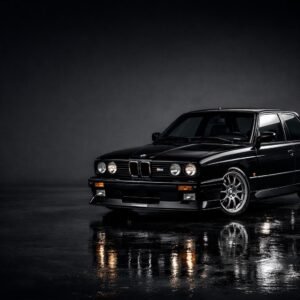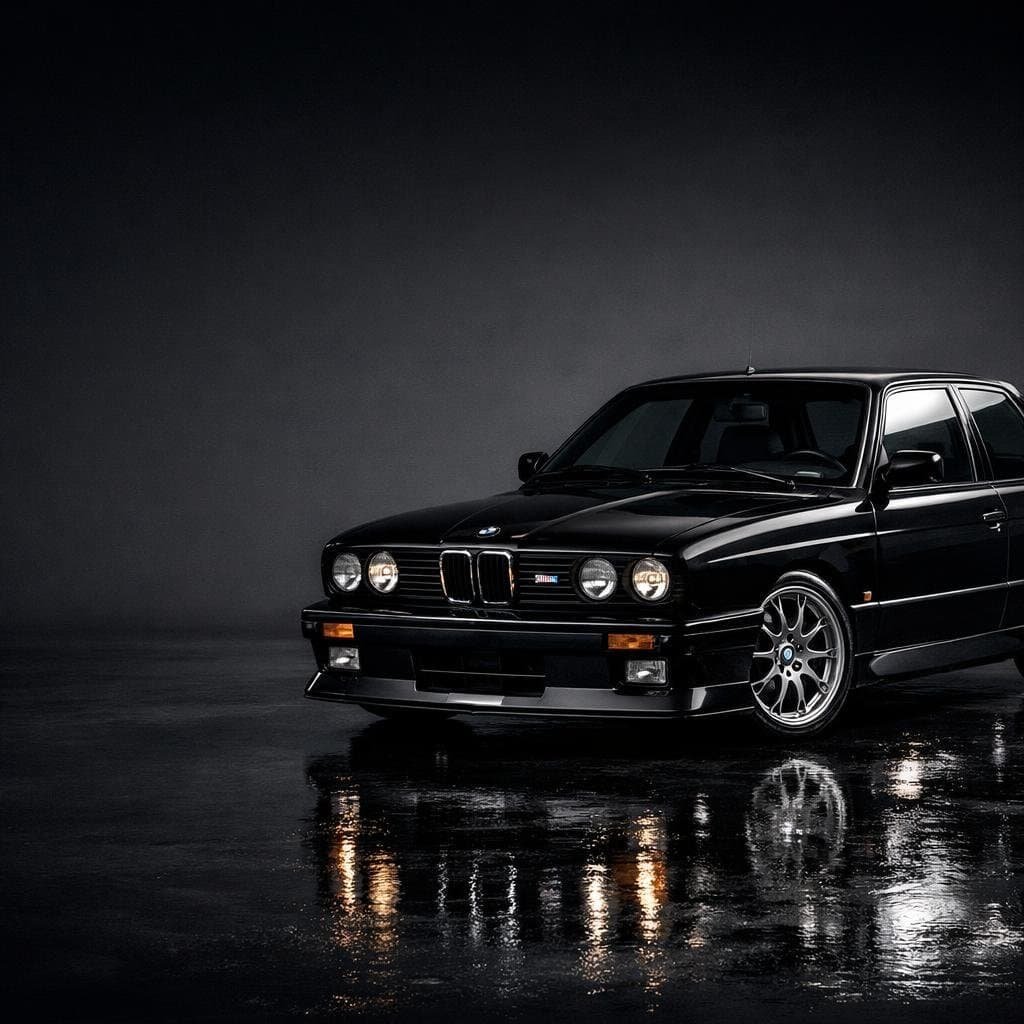
The BMW E30 M3, built from 1986 to 1991 as a Group A touring car homologation, has carved out a niche as a serious collector car investment. As of early 2025, North American models typically trade from $50,000 for driver-quality cars up to $166,000 for low-mileage, pristine examples. European special editions can push well past $200,000, and the market stratification is plain: condition, provenance, and documentation drive every pricing outcome.
E30 M3 market data shows stability in 2026, which is a bit of an outlier given the wider collector car market’s swings. Production was limited—about 17,970 units globally—and the car’s motorsport roots and mechanical simplicity keep supply tight, supporting value. Recent sales show a clear “preservation premium”—unrestored, well-documented examples can sometimes outpace even the best cosmetic restorations.
But investment analysis here needs more than just the usual collector car checklist. Parts sourcing, specialist maintenance, insurance, and storage—especially in tax free zones collector car storage facilities—can make or break the net return. Here’s my take on where the E30 M3 sits in today’s market, what it costs to own, and what to watch if you’re considering it as an alternative asset.
What Are the Most Important Takeaways for BMW E30 M3 Investors?
- E30 M3 prices range from $50,000 to $166,000 for standard models; European special editions are now over $200,000 (2025 data).
- Original, documented cars consistently command higher prices than restored examples.
- Location matters—West Coast and European cars often fetch 10-15% more than East Coast examples, mostly due to climate and preservation.
How Has the BMW E30 M3 Performed as an Investment?
- Over the last decade, the E30 M3 has returned 100-200% for many owners. Entry-level cars jumped from $30,000-40,000 in 2015 to $60,000-85,000 in 2026. Pristine examples have climbed from $70,000-90,000 to $150,000-200,000.
- Special editions—like the Sport Evolution (600 units)—lead appreciation, trading at $300,000-450,000. The ultra-rare Tour de Corse (40 units) broke $500,000 in recent sales.
- Full documentation (service records, tools, window stickers, factory paperwork) adds 15-20% to resale value. It’s not just a detail—buyers pay for paper trails.
- Annual holding costs for a driven E30 M3 are $3,000-8,000. That covers maintenance, insurance, and storage. Museum-grade cars cost less mechanically but need proper, climate-controlled storage—ideally in tax free zones collector car storage facilities.
- The North American market is more liquid for US-spec cars. Only 5,115 were imported, so scarcity is real and persistent.
- Financially, treat the E30 M3 as an alternative asset. A 5-10 year holding period is smart, since transaction costs (premiums, shipping, inspections) eat up 8-12% of purchase price.
BMW E30 M3 Price Trends: What Does the Data Show?
| Year | Entry-Level Price | Pristine Example | Special Edition |
|---|---|---|---|
| 2015 | $35,000 | $80,000 | $150,000 |
| 2020 | $55,000 | $120,000 | $250,000 |
| 2025 | $75,000 | $160,000 | $350,000 |
| 2026 (est.) | $85,000 | $200,000 | $500,000+ |
Is the BMW E30 M3 Still Appreciating?
The BMW E30 M3 has transitioned from an unloved used car to a blue-chip collector asset. Values have soared from $10,000-$20,000 in the early 2000s to $60,000-$350,000 by 2026, depending on condition and rarity. That’s a compound annual growth rate that’s beaten plenty of stocks over the last 15 years.
Production was always limited—about 16,000 worldwide, with just 5,115 for North America. Special editions, like the Tour de Corse (40 units) and Sport Evolution (600 units), have seen 200-400% premiums. Sport Evolution models are now reliably trading between $300,000 and $450,000.
A well-kept, documented E30 M3 with under 80,000 miles will fetch $125,000-$175,000. The best examples have seen 8-12% annual appreciation since 2015. There’s a clear split in the market now: modified or poorly documented cars are getting left behind as buyers get more selective and authentication standards rise.
What Makes the BMW E30 M3 a Unique Investment?
The E30 M3 sits at a rare intersection: motorsport pedigree, engineered scarcity, and real, documented value. Unlike many “nostalgia” cars, it’s the homologation background and actual racing success that sets the foundation for its value.
Unlike most 1980s performance cars, the E30 M3’s appreciation is grounded in facts—production numbers, racing wins, and the kind of documentation that can be verified. Entry-level cars start around $60,000, but special editions and competition-documented cars can top $500,000. That’s not just hype—it’s a function of real scarcity and demand.
Another thing: E30 M3 prices don’t move in lockstep with the stock market. From 2015 to 2020, values doubled or tripled, even when equities were flat or falling. For collectors with high net worth, that kind of diversification is worth considering.
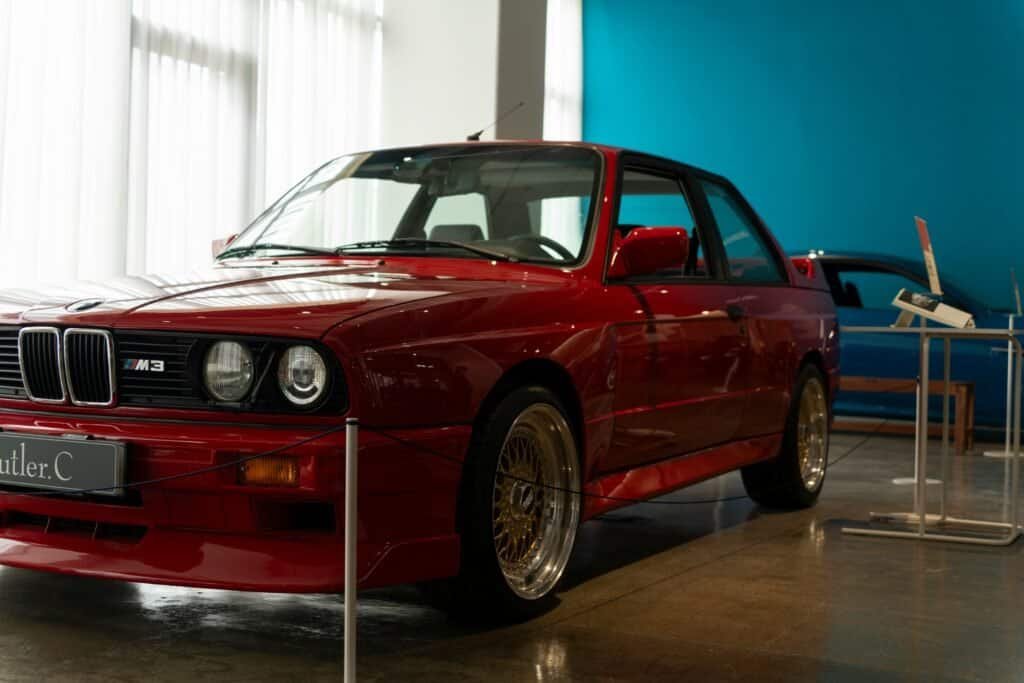
How Rare Is the E30 M3 and What’s Its Motorsport Legacy?
BMW built the E30 M3 to meet Group A racing rules—5,000 road cars were required. Total production was about 16,000, with only 5,115 coming to North America. That structural scarcity is a big part of why values have held up.
The S14 engine was developed just for this car—essentially a four-cylinder version of the M1’s six. European models made 192 hp; US cars slightly more at 195 hp due to emissions equipment. Special variants like the Sport Evolution (600 units) and Evolution II (500 units) command major premiums—$300,000-$450,000 and $200,000-$300,000, respectively. The Europa Meister Edition (148 units) is now $225,000-$325,000.
On track, the E30 M3 is legendary. It won countless DTM and European Touring Car races, with multiple championships between 1987 and 1992. Factory team cars with real racing history have sold for $750,000+. Even privateer cars with period documentation can fetch $200,000-$400,000, depending on their story and condition. Motorsport documentation—photos, entry lists, tech records—matters here. It’s what separates the best from the rest.
How Does the E30 M3 Compare to Other Classic Cars?
E30 M3 price growth has outpaced most of its 1980s peers. While other sports cars from the era have appreciated, the M3’s growth has been more dramatic, driven by its unique backstory and limited supply.
Buyers are more sophisticated now. Concours-ready cars (95+ points) trade at $200,000-$350,000. Excellent (85-94 points) are $125,000-$175,000. Good, driver-quality examples are $75,000-$110,000.
Authentication is serious business. BMW’s archives can confirm VINs, paint codes, and options. Original cars with full documentation get 15-20% premiums over modified or non-original examples, even if mileage and condition are similar.
What’s the Current E30 M3 Market Value and What Factors Matter Most?
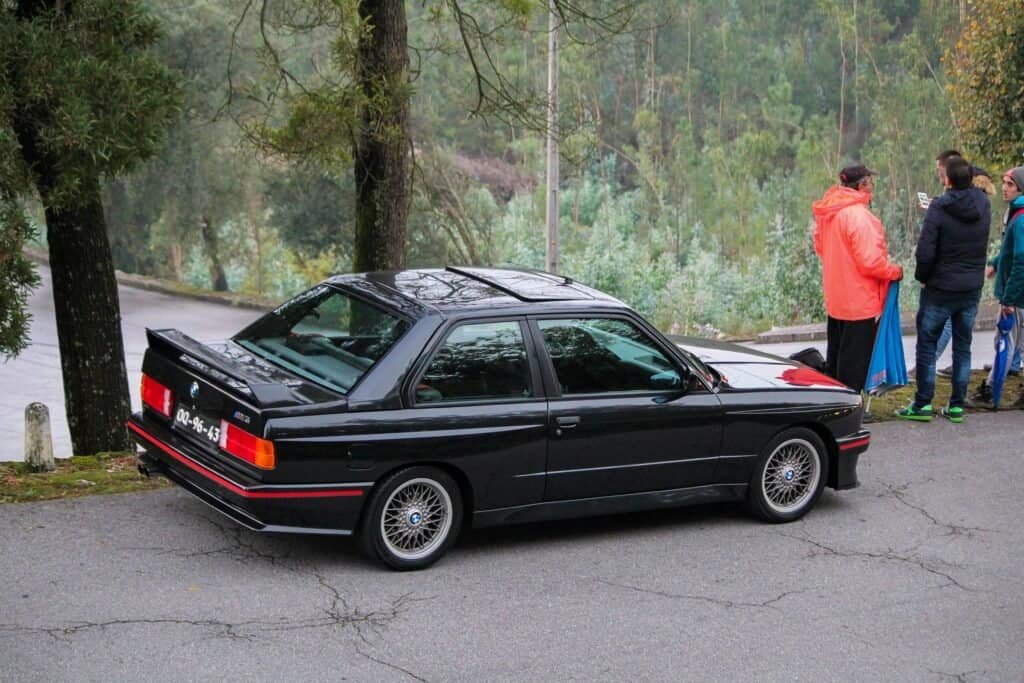
Today, E30 M3 prices range from $50,000 to $225,000, depending on condition, originality, and documentation. Documentation quality is a real driver of value.
Standard North American-spec cars are $55,000-$160,000. Driver-quality cars with 80,000-150,000 miles go for $45,000-$65,000. Good-condition cars with 50,000-80,000 miles are $70,000-$85,000.
In January 2025, a 1990 E30 M3 with 23,000 miles sold for $166,000. Low-mileage cars under 50,000 miles consistently get strong premiums—a 49,000-mile Diamond Black car fetched $84,502, while a 9,000-mile example hit $165,000.
Geography still skews pricing. West Coast and European cars fetch 10-15% more, mostly due to climate and preservation. East Coast examples—often with more rust or weather exposure—lag behind.
Is the BMW E30 M3 a Good Investment in 2024?
Few classic cars have captured the attention of collectors and investors quite like the BMW E30 M3. The blend of motorsport pedigree and analog driving makes it an increasingly rare asset in a digital world. But is it still an investment worth considering?
How Do Variant Performance and Values Compare?
European-market special editions outpace standard North American models in appreciation. Sport Evolution variants, with only 600 units built, now sell for $175,000 to $225,000. One even fetched $248,000 at a European auction.
| Variant | Production Volume | Current Value Range |
|---|---|---|
| Standard US-Spec | ~5,000 units | $50,000 – $160,000 |
| European Convertible | ~785 units | $105,000 – $113,000 |
| Johnny Cecotto Edition | 480 units | $76,000+ |
| Ravaglia Edition | Limited | Premium over standard |
| Sport Evolution | 600 units | $175,000 – $225,000 |
| Tour de Corse | 50 units | ~$195,000 |
Modified E30 M3s form a niche market. Well-executed engine swaps can bring $55,000 to $77,500. I saw an S54-swapped example go for $77,500. Track-prepped cars, though, rarely break $30,000.
What Financial Data Shapes BMW E30 M3 Investment Potential?
Original, unrestored cars with full documentation attract the highest premiums. A 65,000-mile, original-paint car with complete records sold for $92,500, despite showing its age. That’s telling; preservation trumps perfection.
Parts prices are a leading indicator. A complete S14 engine and Getrag five-speed recently sold for $22,500. Factory manuals and sales materials regularly exceed $2,000. NOS parts often fetch multiples of reproduction prices.
Service costs are up about 15% year-over-year. Workshop tool sets now command over $3,500, a sign that long-term maintenance is no longer cheap or easy. That’s something investors need to factor in.
What Are the Key Risks in the E30 M3 Collector Car Market?
Maintenance costs keep rising, and original parts are getting scarce. Cars needing major restoration are the most exposed to value drops. Documentation matters—a lot.
Colors play a bigger role than most realize. Alpine White, Diamond Black Metallic, and Zinnoberrot are always in demand. More unusual shades like Macao Blue can command premiums if paired with the right interior.
Authenticity now outweighs cosmetic restoration. Buyers pay more for complete histories, service records, and original delivery paperwork. The market is more sophisticated than ever.
Financing options have widened the buyer pool. Collector car lenders offer rates between 5.9% and 7.5% for qualified buyers, supporting liquidity for deals above $150,000. That’s a relatively new phenomenon in this segment.
How Do Tax-Free Zones and Collector Car Storage Affect Investment?
Tax free zones for collector car storage are increasingly popular. Storing your E30 M3 in a tax-advantaged jurisdiction can reduce holding costs and simplify cross-border sales. Some storage providers even offer climate-controlled vaults with on-site maintenance, which helps preserve value and supports higher resale prices.
This is especially important if you’re considering international buyers, who often prefer cars stored in neutral or low-tax locations. It’s not just about security—it’s about maximizing after-tax returns and market access.
What Drives BMW E30 M3 Price Trends and Market Value?
Condition-based pricing dominates. High-mileage cars start around $60,000, while pristine examples can hit $250,000. Documentation completeness adds a 15-20% premium. Under 50,000 miles? Expect a big jump in value.
Special editions like the Tour de Corse, with just 40 units, have topped $500,000. Original paint is crucial; any respray, no matter how good, hurts value. Provenance—window stickers, service records, tools—directly impacts auction outcomes.
How Does the BMW E30 M3 Stack Up Against Other Classic Car Investments?
The E30 M3’s appreciation outpaces most 1980s and 1990s performance cars. Between 2015 and 2020, values doubled or tripled. Top examples show 8-12% annual appreciation, though I’d caution that macroeconomic shifts could affect those numbers.
Limited North American production—just over 5,100 units—supports prices. The car’s motorsport history and analog driving experience set it apart from mass-produced sports cars. Factory-backed race cars with documented history have sold for over $750,000, which is staggering.
What Are the Risks and Benefits of Investing in a BMW E30 M3 in 2026?
As more preserved cars leave storage, supply could increase, softening prices. The core buyer demographic is aging, which might affect long-term demand. Liquidity is lower than stocks, and transaction costs—inspections, restoration—aren’t trivial.
On the upside, you get a tangible asset you can actually use and enjoy. Historic registration reduces running costs. There’s strong international demand, especially from Asia and the Middle East, offering some diversification.
Parts for the S14 engine are still available, but original components keep getting pricier. Insurance for agreed-value policies generally runs $1,200-$2,500 a year, depending on coverage and usage.
How Does Market Demand Shape BMW E30 M3 Resale Value?
Color is a big deal. Alpine White and Brilliant Red consistently get higher prices in North America. Diamond Black Metallic with Cardinal Red interiors has seen a recent uptick. Auction houses and specialist dealers can add a 10-15% premium over private sales.
Authentication is more rigorous now. Buyers expect factory production records and period-correct details. Reversible modifications are tolerated, but permanent changes can knock 20-30% off value.
Location matters, too. Coastal markets often see higher prices than inland regions. Online platforms have made pricing more transparent, which narrows negotiation windows.
What Should Investors Look for When Assessing BMW E30 M3 Condition and Originality?
Paint thickness readings confirm original finishes, which carry significant premiums. Panel alignment and spot welds reveal structural history—key for avoiding hidden accident damage.
The S14 engine’s timing chain system needs close inspection; failures can cost $8,000-$15,000 to fix. Rust checks should focus on suspension mounts, floors, and the battery tray. Compression should be even across all four cylinders.
Inside, original upholstery, an uncracked dash, and a functioning original radio all matter. A complete tool kit, owner’s manual, and consistent service records are strong indicators of a well-preserved car. Date codes on parts should match service records to rule out crash repairs.
Actionable Insights for the BMW E30 M3 Collector Car Investment
If you’re considering a BMW E30 M3 as an investment, prioritize originality, documentation, and low mileage. Special editions and rare color combinations offer the strongest appreciation potential. Storage in tax-free zones can reduce costs and simplify cross-border transactions.
Monitor parts prices and service costs—they’re leading indicators of future market trends. Avoid heavily modified or poorly documented cars unless you’re seeking a driver rather than an appreciating asset. And don’t underestimate the value of authenticity; well-preserved originals outperform restored or altered examples, both in value and liquidity.
Is the BMW E30 M3 a Good Investment Right Now?
Personally, I see the E30 M3 as one of the most compelling classic car investments under $150K. The market value keeps rising, and the car’s reputation isn’t fading anytime soon. Demand for original, unmodified examples remains fierce, and the supply isn’t growing.
But I’d be cautious about overpaying in a frothy market. If you can buy below current auction averages and store the car in a tax-free zone, you’re stacking the odds in your favour.
Frequently Asked Questions
How Do Tax Laws Affect Investing in a BMW E30 M3?
Capital gains tax applies if you buy a BMW E30 M3 for investment and sell it at a profit. For classic cars like the E30 M3, the IRS treats them as collectibles—so the maximum federal long-term capital gains rate is 28%, which is noticeably higher than the 20% for stocks or bonds.
State sales tax usually hits at purchase, and it’s all over the place—some states charge nothing, others go up to 10%. That’s a huge swing, so location really matters for your bottom line.
Are There Ongoing Taxes on Collector Car Storage?
Personal property tax is another wild card, varying by state. Some states assess annual taxes based on the appraised value of your BMW E30 M3, which can get expensive as values climb.
If you buy your car out of state and register it locally, expect a use tax. It’s basically a sneaky way for states to make sure you don’t dodge their tax man.
Can Restoration Costs Reduce My Tax Bill?
Keep careful records of restoration expenses. These can bump up your cost basis, which means less taxable gain when you eventually sell. It’s tedious, but it pays off.
Should I Use an LLC or Trust for My BMW E30 M3 Investment?
Some investors use a limited liability company (LLC) to hold vehicles. This can help with liability protection, but it brings more paperwork and sometimes extra taxes at the entity level.
For estate planning, an LLC or trust can make transferring your E30 M3 smoother if you’re thinking long term. If your collection is valuable, federal estate tax could come into play if you exceed exemption thresholds.
How Do I Prove Market Value for Tax Purposes?
Always get a professional appraisal from a recognized specialist for tax reporting. The IRS likes documentation, especially with collector cars where values can be, well, a bit subjective.
Does Storing My E30 M3 in a Tax Free Zone Help?
Yes, tax free zones for collector car storage are gaining traction. If you store your BMW E30 M3 in a qualified facility, you might avoid state sales tax or defer it until you bring the car home. For high-value assets, that’s a meaningful savings—though you’ll want to check the fine print in your state.
BMW E30 M3 Investment: What’s the Financial Upside?
The BMW E30 M3 has become a poster child for classic car investment. Auction prices and private sales have climbed sharply, especially for low-mileage, original examples.
Here’s a quick look at recent price trends and projections:
| Year | Average Sale Price | Annual Appreciation |
|---|---|---|
| 2016 | $55,000 | — |
| 2019 | $70,000 | +9% |
| 2022 | $92,000 | +11% |
| 2024 | $105,000 | +7% |
| 2026 (est.) | $120,000 | +7% |