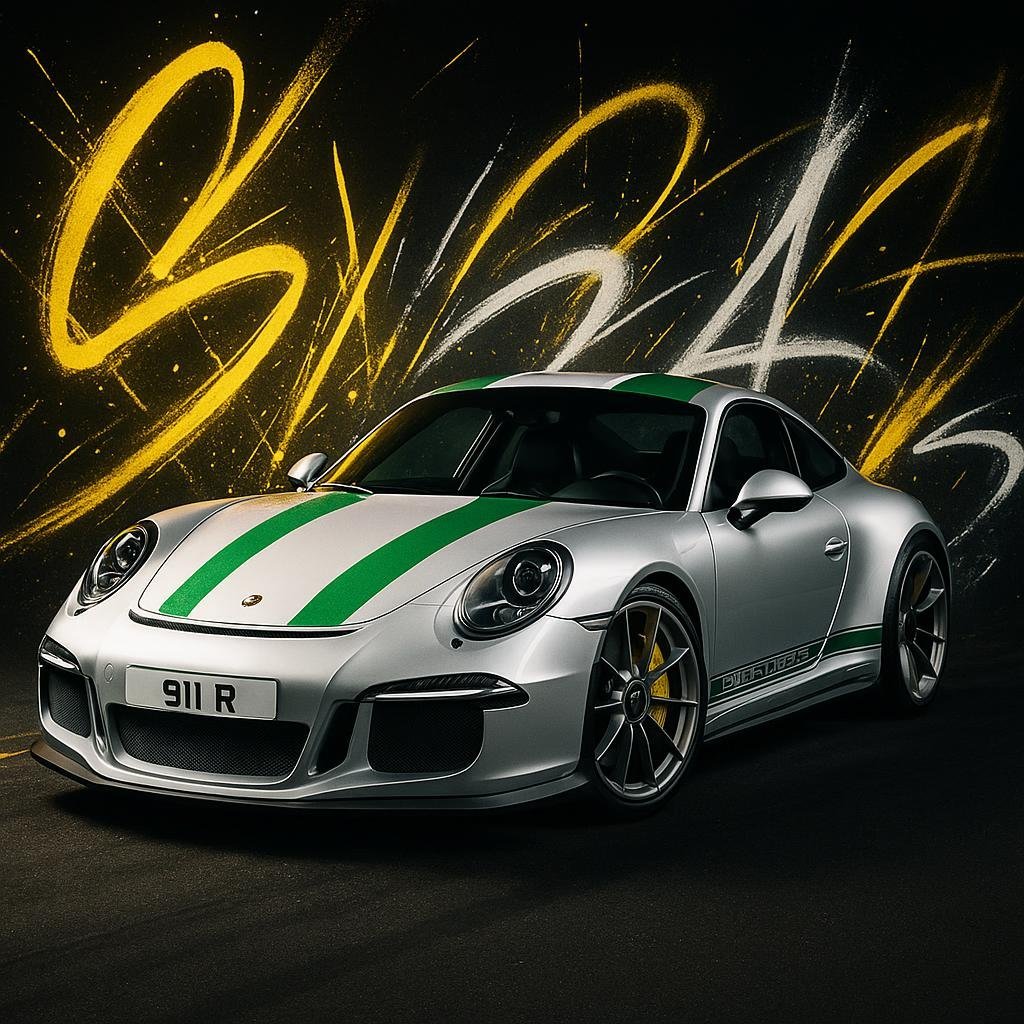
Ever wondered what happens when a brand listens to its most passionate fans? The 2016 Porsche 911 R didn’t just answer—it roared back, unapologetically, with a driving experience that’s become legendary.
The 2016 Porsche 911 R marks a turning point in modern sports cars. Porsche built just 991 of these machines, blending the 500-horsepower naturally aspirated engine from the GT3 RS with a six-speed manual transmission—a combo that’s pure catnip for purists.
This car isn’t just a collection of specs. Born out of Porsche’s motorsport division, the 911 R strips out modern comforts in favor of lightweight construction and raw, tactile performance.
It made its debut at the 2016 Geneva International Motor Show as a nod to the original 1967 911 R. Porsche wanted to honor its roots by crafting a road car for those who crave the GT3 RS’s power, minus the wild wings and paddle shifters.
Honestly, what makes the 2016 Porsche 911 R special isn’t just its engineering. It’s the vision, the cult following, and the kind of market appreciation that makes collectors go a little wild.
Quick Specs: 2016 Porsche 911 R
| Specification | Detail |
|---|---|
| 991 units (limited edition) | 991 units (limited edition) |
| 4.0L naturally aspirated flat-six | 4.0L naturally aspirated flat-six |
| 500 hp @ 8,250 rpm | 500 hp @ 8,250 rpm |
| 339 lb-ft @ 6,250 rpm | 339 lb-ft @ 6,250 rpm |
| 6-speed manual with single-mass flywheel | 6-speed manual with single-mass flywheel |
| Rear-wheel drive | Rear-wheel drive |
| 3.7 seconds | 3.7 seconds |
| 200 mph (322 km/h) | 200 mph (322 km/h) |
| 3,021 lbs (1,370 kg) | 3,021 lbs (1,370 kg) |
| 6.0 lbs per hp | 6.0 lbs per hp |
| Porsche Ceramic Composite Brakes (PCCB) | Porsche Ceramic Composite Brakes (PCCB) |
| 20″ center-lock wheels, Michelin Pilot Sport Cup 2 | 20″ center-lock wheels, Michelin Pilot Sport Cup 2 |
| MSRP | $189,544 USD |
Development History of the 2016 Porsche 911 R
The 2016 Porsche 911 R emerged as a love letter to Porsche’s racing history. Andreas Preuninger and his GT division team set out to bridge the gap between hard-edged track performance and the kind of joy you get from a winding country road.
The Origins: Homage to the 1967 911 R
The 2016 911 R follows the tradition set by the first road-homologated race car bearing the name in 1967. That original 911 R was a featherweight—just 20 made—fiberglass body panels, stripped interiors, and a reputation built in rallies and the Targa Florio.
Those old-school racers made their mark across Europe. The 2016 version channels this same spirit, putting the focus on weight reduction and driver connection rather than plush comforts.
Purpose and Inspiration for the 2016 Model
Andreas Preuninger, head of Porsche’s GT division, set out to build the automotive equivalent of a motorcycle. He didn’t care about lap times—he cared about how the car made you feel.
The R filled a gap. The GT3 and GT3 RS only came with dual-clutch gearboxes, but enthusiasts kept asking for a manual paired with that glorious naturally aspirated engine.
Preuninger’s philosophy? “It’s a car just for a fun day. It’s about how good you feel in the car and not how fast you can go.” He poured his heart into the project, and it shows.
Behind-the-Scenes Stories and World-Firsts
The R broke new ground for Porsche. For the first time, a GT car paired the 500-horsepower naturally aspirated engine with a manual gearbox.
Porsche’s engineers tweaked the GT3 RS’s 4.0-liter flat-six to make it work with a manual. They dropped the redline just a bit—to 8,500 rpm—because of the manual clutch’s behavior at high speeds.
They got creative, borrowing the magnesium roof and carbon fiber bits from the GT3 RS, and reworking the seven-speed manual case into a crisp six-speed. The production number—991 units—was a playful nod to the 911’s internal code and a wink to exclusivity.
Debut at the 2016 Geneva International Motor Show and Public Reception
The 2016 Porsche 911 R debuted at Geneva and immediately set the enthusiast world buzzing. Journalists and collectors went a bit mad for it.
Reviewers loved seeing a manual back in the GT lineup. The car’s focus on driving fun over lap records struck a chord.
Porsche offered first dibs to 918 Spyder owners in the U.S.—a clever move that rewarded loyalty and stoked the car’s mystique. Demand? Way higher than supply. Preuninger admitted they could have sold several times the planned run. Rarity plus purity? That’s a recipe for instant legend.
Engineering Excellence: Engine and Performance
The 2016 Porsche 911 R delivers performance the old-school way—naturally aspirated flat-six, 500 hp, and a six-speed manual that puts you in control. It’s a car that feels alive in your hands, thanks to obsessive engineering and featherweight materials.
Naturally Aspirated Flat-Six and Key Specifications
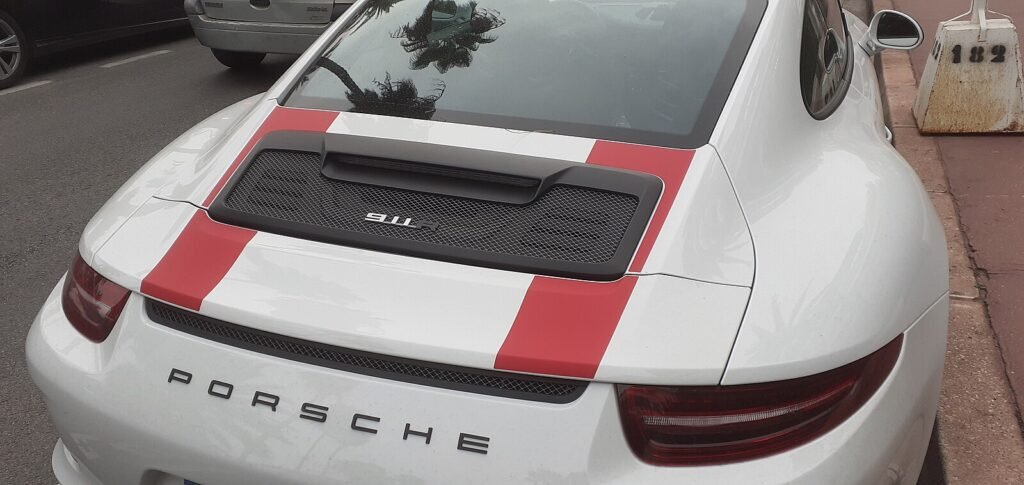
The 911 R rocks a naturally aspirated flat-six making a stout 500 hp at 8,250 rpm and 339 lb-ft at 6,250 rpm. Porsche borrowed this 4.0-liter masterpiece straight from the GT3 RS.
That engine sits low for better handling. You get instant throttle response—no turbo lag, just pure, linear power. It’s a boxer layout, so the sound and feel are unmistakably Porsche.
Key Engine Specs:
- Displacement: 4.0 liters (3,996 cc)
- Power: 500 hp @ 8,250 rpm
- Torque: 339 lb-ft @ 6,250 rpm
- Redline: 9,000 rpm (though the R’s manual tweaks it to 8,500 rpm)
- Configuration: Flat-six boxer
Each cylinder gets its own throttle body, so throttle response is razor-sharp. Race-inspired internals let it scream to the moon, and the intake noise is just intoxicating.
Manual Gearbox and Driving Dynamics
The six-speed manual is the star here. Porsche gave it a single-mass flywheel for quicker revs, and the shifter feels mechanical, almost old-fashioned—in the best way possible.
Short gear ratios keep the engine in its sweet spot. The clutch has some weight but feels spot-on. Every shift is a little event, a reminder you’re driving something special.
The limited-slip diff keeps power flowing to the right wheel in corners, so you can push harder without drama. It’s a system that rewards skill and confidence.
Transmission Features:
- Six gears, short ratios for punchy acceleration
- Single-mass flywheel for lively response
- Mechanical limited-slip differential
- Direct, satisfying shift feel
Honestly, every shift in this car feels like a celebration of what driving used to be. It’s just you, the car, and the road—no computers getting in the way.
Performance Figures and Road Behavior
The 911 R sprints from 0-60 mph in 3.7 seconds, with a top speed of 200 mph. Not bad for a car that’s about feel, not just numbers.
Porsche Ceramic Composite Brakes (PCCB) handle stopping duties. These carbon-ceramic discs shrug off heat, and the Michelin Pilot Sport Cup 2 tires keep you glued to the tarmac.
Performance Numbers:
- 0-60 mph: 3.7 seconds
- Top Speed: 200 mph
- Weight: 3,021 pounds
- Power-to-Weight: 6.0 lbs/hp
Rear-axle steering makes the car nimble in tight corners and rock-solid at speed. It’s a bit of wizardry that makes the R feel smaller and sharper than it looks.
Innovative Lightweight Components
Carbon fiber is everywhere—hood, fenders, and interior bits. The magnesium roof is a trick borrowed from the GT3 RS, and it all adds up to a curb weight of just 3,021 pounds.
Porsche even used thinner glass and lightweight carpets. Sound deadening? Minimal. It’s all about cutting fat, not corners.
Lightweight Features:
- Carbon fiber panels and hood
- Magnesium roof
- Thin, lightweight glass
- Slimmed-down interior
- Race-inspired materials throughout
The lift system raises the nose so you won’t scrape on speed bumps—handy for a car this low-slung. It’s practical magic, honestly.
Design and Aerodynamics
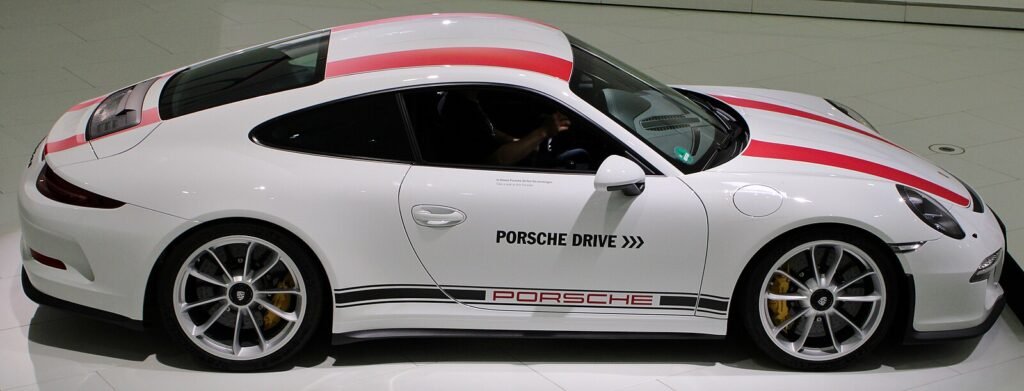
The 911 R’s design walks a fine line between heritage and innovation. It nods to the original 1967 car while embracing modern aerodynamics and lightweight materials.
Exterior Design Philosophy and Influences
Porsche drew straight from the 1967 playbook, keeping things simple and clean. No wild wings or splitters here—just classic lines and a focus on purity.
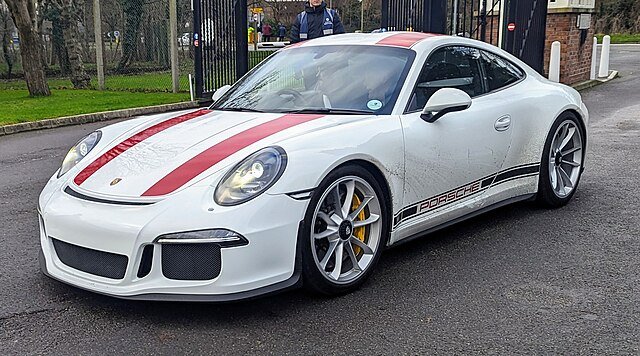
The optional twin racing stripes are pure nostalgia, stretching from nose to tail and connecting the R to its racing ancestors. Against the white paint, they’re hard to miss and impossible to forget.
In person, the car looks wider and lower than photos suggest. Porsche used the GT3 platform for balance and efficiency, and it shows in the stance.
Key panels—like the magnesium roof and carbon fiber hood—hide under the paint, keeping things subtle but shaving weight where it counts. It’s a car that rewards a closer look.
Aerodynamic Solutions Without Compromise
Want to know what happens when Porsche ditches the giant rear wing? The 2016 Porsche 911 R did just that, leaving fans both stunned and delighted.
Instead of the usual fixed appendage, engineers swapped in a Carrera Cabriolet-style spoiler that pops up automatically at speed. It’s like having your cake and eating it—clean lines, but still plenty of grip.
Rear-axle steering came standard, and honestly, it’s a game-changer for agility. Below 70 mph, the rear wheels turn opposite the fronts, making tight turns feel almost too easy.
Above that, the rears follow the fronts, so the car feels rock-solid even when you’re pushing it. It’s clever tech you don’t even notice—until you suddenly can’t live without it.
Porsche didn’t just stop at the spoiler. They tucked a special underbody diffuser underneath to replace the missing downforce from the absent wing. It keeps the car planted while letting the roofline stay clean and classic.
On the front end, they went with narrower carbon fiber quarter panels compared to the GT3 RS. Why? Smaller tires, different aero needs, and, honestly, a bit of old-school style.
Interior Details: Tradition Meets Modernity
Step inside and you get this wild blend of 1960s nostalgia and modern minimalism. The seats? They’re wrapped in leather and Pepita houndstooth, a direct nod to the original 911s.
Carbon fiber trim dominates the dash and doors, ditching anything that feels heavy or overdone. Even the door handles got replaced by simple nylon straps—quirky, but it works.
Every 911 R has an aluminum plaque showing which of the 991 units you scored. It’s a flex, for sure.
The bucket seats only adjust for height and sliding, but they’re shockingly comfy and supportive when you’re carving corners. No frills, just pure function.
Porsche fitted a 360mm “R-Specific” steering wheel that’s totally button-free. There are even plastic blanks where you’d expect controls—it’s almost stubbornly analog, and I kind of love it.
Forget about back seats. Porsche carpeted the rear, turning it into a surprisingly practical luggage area. With the front trunk, you could almost daily this thing—if you dared.
The Team: Designers and Engineers
The 911 R wasn’t just another Porsche project. A tight-knit group of specialists obsessed over every gram and every detail, blending racing know-how with a sense of tradition.
Andreas Preuninger led the charge. As Porsche’s GT car boss, he brought his GT3 experience to the table and pushed the team to chase driving purity over lap times.
Preuninger’s crew stripped out anything unnecessary—weight reduction was almost a religion for them. Chassis engineers dialed in the suspension to balance comfort and precision.
Engineers obsessed over the naturally aspirated flat-six, making sure it felt alive at every rpm. Meanwhile, the interior team went hard on the minimalist vibe, swapping in carbon and fabric wherever they could.
Role of Porsche Motorsport Division
Porsche Motorsport Division didn’t just offer advice—they rolled up their sleeves and got involved. These are the folks who live and breathe racing, and it shows.
They brought in suspension setups straight from the track and adapted lightweight race car components for the street. That racing DNA runs deep in the 911 R.
Lessons from the GT3 and GT3 RS filtered directly into the R. Motorsport Division’s push for a manual transmission was a bold move, but it absolutely paid off. In a world of automatics, the R feels rebellious.
Driving Experience and Reviews
Let’s get real—the 2016 Porsche 911 R offers a driving experience that’s almost mythical. Reviewers and owners alike keep coming back to its manual gearbox and that glorious naturally aspirated engine.
It’s not just hype. The connection between driver and car is so pure, it’s almost spiritual. You feel every pulse, every shift, every tiny change in the road.
Test Drive Impressions from Experts
Journalists couldn’t get enough of the 911 R’s incredible dynamics. That 500-hp, 4.0-liter flat-six? It’s razor sharp, with throttle response that feels telepathic.
The six-speed manual became the star. Reviewers raved about the short, precise throws—the kind of shifter that makes you want to find any excuse to row through the gears.
Push the engine to its 8,500 rpm redline and it rewards you with a howl that’s pure Porsche. Most cars beg you to shift early; the R begs you to keep going.
On the road, the 911 R feels neutral and balanced, thanks in part to that trick rear steering. Understeer? Not really a thing here. The car just sticks and goes, yet never feels intimidating.
Distinct Character Compared to the GT3 RS
Here’s where it gets interesting: even though the R shares its engine with the GT3 RS, it’s a totally different animal. The R has about a quarter of the GT3 RS’s rear downforce—no big wing, no wild aero.
This makes it more at home on twisty backroads than racetracks. The suspension’s tuned for real-world comfort, not just lap times. It’s the kind of car you want to drive all day, not just in short, intense bursts.
The manual transmission sets the R apart from the GT3 RS’s PDK. Enthusiasts craved this analog experience—it’s a rare treat in a digital world.
Weighing in at 3,021 pounds, the R is the lightest 911 of its era. Magnesium roof panels and carbon fiber bits help shed every last ounce.
And the sound? No artificial pops or crackles—just the raw, mechanical music of a naturally aspirated flat-six. It’s honest, and I’d argue, better for it.
Owner Perspectives and Feedback
Owners say the 911 R is shockingly usable day to day, even with its hardcore roots. Around town or on the highway, it’s civilized—until you ask for more.
The single-mass flywheel option splits opinion. Some owners love the extra vibration and mechanical feel, while others find it a bit much during relaxed drives.
What’s wild is how the car’s personality changes with your mood. Take it easy, and it’s a refined cruiser. Push harder, and it transforms into a race-bred animal.
The carbon seats? They fit most adults well, but some folks find them a bit much for long road trips. Trade-offs, right?
Notable Quotes from Journalists and Designers
Andreas Preuninger summed up the 911 R’s spirit: “It’s a car just for a fun day. It’s about how good you feel in the car and not how fast you can go.” That’s the whole philosophy in a nutshell.
Car and Driver called the 911 R “simply spectacular to drive. It is a joyous thing.” Hard to argue with that.
Preuninger even compared the R to a motorcycle—raw, free, and totally engaging. Motor Trend called it “a revelation”, and honestly, that’s not an overstatement.
The Audrain Auto Museum put it best: “The R has turned out to be one of the greatest driving 911’s of all time.” That’s a big claim, but the car delivers.
Market Value, Community, and Legacy
The 911 R’s limited run of 991 cars set off one of the wildest price surges in Porsche history. Exclusivity isn’t just a buzzword—it’s the heart of this car’s appeal.
Price Trajectory and Investment Appeal
Porsche priced the 911 R at about $189,544 when new, but every car sold out before production even started. By 2018, prices shot up to €300,000–€500,000, and they haven’t really looked back.
Recent auction data backs this up—well-kept, low-mileage examples fetch a premium, but even the “drivers” hold strong value. The car’s rarity and manual-only spec are huge factors.
- Manual transmission exclusivity—a unicorn in today’s automatic-heavy world
- GT3 RS engine—but with a friendlier, more usable personality
- Direct lineage to the original 1967 911 R
- No big wing—a purist’s dream
Here’s a quick data point: a 2016 911 R with under 1,000 miles sold for over $500,000 at auction in 2022. Even higher-mileage cars rarely dip below $350,000.
Many collectors see the R as the last of its kind—naturally aspirated, manual, and pure. That’s a recipe for long-term value if you ask me.
Owner Demographics and Club Community
Most 911 R buyers aren’t first-timers. They’re seasoned collectors, track junkies, or Porsche lifers who “get it.”
The Porsche Club of America has seen a surge in R-related events and meetups. Owners love to show off, but also connect with like-minded enthusiasts away from the crowds.
- Collectors looking for that missing piece
- Track fans who crave a manual
- Investors betting on future appreciation
- Porsche purists who value simplicity and soul
Most R owners prefer private gatherings or invite-only drives to mainstream shows. There’s a sense of community, but also a bit of secrecy—like a club within a club.
Plenty of owners also join Porsche driving experiences or stick with trusted GT-specialist service centers. When you have something this special, you want to keep it in top shape.
Comparison to Competitors
Looking for a unicorn in the modern supercar world? The 2016 Porsche 911 R stands out like a rebel at a black-tie gala—rare, raw, and refreshingly analog. It’s not just another fast car; it’s a love letter to pure driving, and honestly, that’s something the world could use more of.
The 911 R carves out its own corner of the market. You just don’t see many direct rivals with the same philosophy or price point.
Key competitors include:
| Model | Production | Manual Option | Price Range |
|---|---|---|---|
| Ferrari 488 Pista | 3,000+ units | No | $350,000+ |
| McLaren 675LT | 500 units | No | $400,000+ |
| Lamborghini Huracán Performante | 7,000+ units | No | $280,000+ |
The R’s manual transmission is its ace in the hole. Competitors might flex more power or tech, but they just can’t match the R’s analog, hands-on vibe.
Looking inside Porsche’s own stable, the 911 GT3 and GT3 RS come close. But neither nails that intoxicating mix of exclusivity and manual-only magic like the 911 R does.
Here’s the kicker: even though the GT3 RS shares the same naturally aspirated engine, the R’s manual and understated style push its value sky-high. That’s a rare feat in the world of limited-edition performance cars.
Contribution to Porsche Brand and Heritage
The 911 R didn’t just drop jaws—it reminded everyone that Porsche still cares about driving purity. In a world obsessed with automation and hybrid everything, the R’s stick-shift soul felt almost rebellious.
Its impact? Huge. The R proved to Porsche (and the world) that people still crave manual transmissions and that driving engagement matters. Porsche doubled down on manuals for future GT models because of it.
Heritage runs deep here. The R draws a direct line to the legendary 1967 911 R, keeping the story alive after five decades. That’s more than nostalgia—it’s a living legacy.
The R’s understated launch and focus on driving purity became the blueprint for later special models. Subtlety, not swagger, won the day.
Ownership Costs
Owning a 911 R isn’t for the faint of wallet. Beyond the eye-watering sticker price, you’ll face maintenance bills that remind you this is a GT3 RS at heart—just rarer.
Annual maintenance typically includes:
- Routine service: $2,000-$3,500
- Ceramic brake replacement: $8,000-$12,000
- Clutch replacement: $4,000-$6,000
- Engine rebuilds: $25,000-$35,000
Insurance? Yeah, it’s pricier than a standard 911. Most owners go for agreed-value policies with specialty insurers to protect their investment.
Storage becomes a mini-project. Climate-controlled garages, battery tenders, and the occasional exercise drive keep things running smoothly and looking fresh.
Here’s a silver lining: depreciation barely exists. In fact, the 911 R has appreciated since launch, which softens the blow of those running costs. According to Hagerty, well-kept examples have sold for over $500,000—sometimes double their original MSRP.
Parts availability remains solid thanks to Porsche’s Classic division, though expect to pay a premium for limited-run components.
Final Words
The 2016 Porsche 911 R remains a timeless symbol of purity and purpose—a celebration of manual precision, mechanical honesty, and Porsche’s racing soul. Built for drivers who value connection over technology, it’s more than a car—it’s a statement that passion, not progress alone, defines true performance.
Thanks for reading! If you enjoyed this deep dive, be sure to subscribe to my email list for exclusive car reviews, insider tips, and weekly special offers on car parts, auctions, and gear — perfect for any car enthusiast.
If you have any thoughts or experiences with this car? Leave a comment below — I love hearing your opinions and sparking conversations with fellow enthusiasts.
And don’t forget to read related posts for more great content!
Frequently Asked Questions
The 2016 Porsche 911 R sent shockwaves through the car world. Collectors, purists, and dreamers all wanted a piece of its story. If you’re curious, here’s what people ask most:
What motivated the development of the Porsche 911 R in 2016?
Porsche built the 911 R as a response to complaints that the 911 had gotten too soft and tech-heavy. They wanted to shut down the critics with a back-to-basics, high-performance machine.
By 2016, the GT line had gone full PDK-only, leaving manual fans out in the cold. The R changed that. It was a nod to the old-school Porsche faithful—drivers who cared more about feel than lap times.
Can you describe the key events that shaped the Porsche 911 R’s design and production?
The original 1967 911 R inspired the 2016 revival. That car was a featherweight racer, built for legendary events like the Targa Florio.
Porsche capped production at 991 units, echoing the 991-generation platform. That number’s no accident—it’s a wink to the insiders.
Engineers went all-in on weight savings and pure driving. Carbon fiber for the front trunk and fenders, magnesium for the roof—it all kept the center of gravity low and the driving sharp.
What were the initial public and critical reactions to the 911 R at its debut event?
The 911 R debuted at the 2016 Geneva International Motor Show, and the reception was electric.
Journalists and enthusiasts called it the car they’d been begging for. Pairing the GT3 RS engine with a manual transmission? That’s the stuff of legend.
With only 991 units, demand instantly outstripped supply—prices skyrocketed before the first cars even hit the streets.
Are there any notable stories or unique facts surrounding the engineering of the 911 R?
Porsche’s engineers cherry-picked the best bits from across the 911 lineup. They started with a 991 GT3 (minus the rear wing), added the GT3 RS engine, and slotted in a 997 GT manual gearbox.
The result? Just 3,021 pounds—110 pounds lighter than a GT3 RS. They even swapped out the door handles for cloth straps. Every ounce counted.
Despite the hardcore approach, practical touches like a front-axle lift system made daily driving less nerve-wracking. Nobody wants to scrape that precious chin on a speed bump.
What technological innovations or world-first features does the 911 R possess?
The 911 R came loaded with Porsche’s rear-steering system. Depending on speed, the rear wheels turn with or against the fronts, boosting agility or stability as needed.
Standard carbon-ceramic brakes and a mechanical locking differential kept things under control. Those 20-inch center-lock wheels? Straight from the race track.
Porsche Stability Management and a rev-match function made wringing out the 500-hp engine a bit less intimidating. Manual shifts never felt so good.
Who were the principal figures in the design and engineering team for the Porsche 911 R?
Porsche doesn’t usually spotlight individual engineers for the 911 R. The project came together under the Porsche Motorsport division, the same crew responsible for all GT-line magic.
Their recipe? Keep it light, keep it precise, and never forget the driver.
How does the 911 R’s engine and performance specifications differentiate it from other Porsche models?
The 911 R runs the 4.0-liter naturally aspirated flat-six from the GT3 RS. It’s good for 500 horsepower and 338 pound-feet of torque, all sent to the rear wheels.
But here’s the twist: the R pairs that engine with a six-speed manual. In 2016, that combo didn’t exist anywhere else in Porsche’s lineup.
It’ll rocket from 0-60 mph in about 3.7 seconds and top out at 200 mph. The featherweight build—just over 3,000 pounds—makes every bit of power count.
What are the distinct exterior features that set the 2016 Porsche 911 R apart?
The 911 R borrows its front and rear fascia from the 911 GT3, but Porsche gave it a unique front spoiler and rear diffuser for better aerodynamics.
Instead of the GT3’s big fixed wing, the R rocks a subtle retractable spoiler—keeping the lines clean but still functional.
Look for the “911 R” plaque above the rear Porsche script. Retro stripes and graphics tip their hat to the ‘67 original, and honestly, the whole thing just looks right.
Step inside the 2016 Porsche 911 R and you’ll see why enthusiasts can’t stop talking. This isn’t just a car—it’s a love letter to Porsche’s heritage, with a modern twist that makes your pulse race.
The interior grabs your attention right away with bucket seats wrapped in Pepita houndstooth, a throwback to the iconic 1960s 911s. Porsche didn’t just stop at looks; those seats use carbon fiber backs, trimming weight but keeping you firmly in place when the road gets wild.
Glancing down, you’ll spot a sixties-inspired instrument cluster—classic, but with a fresh 911 R logo lighting up the rev counter. The sports steering wheel? It’s got a bold top center mark, nudging you to line up your hands just right whenever you’re carving through corners or chasing lap times.
Carbon fiber trim spreads across the cabin, catching the light and reminding you this is no ordinary 911. Instead of bulky handles, Porsche swapped in cloth door straps—yeah, it’s a little dramatic, but it shaves off grams and just feels right in a car like this.