Lamborghini Sián FKP 37 – Ultimate Hybrid V12 Supercar
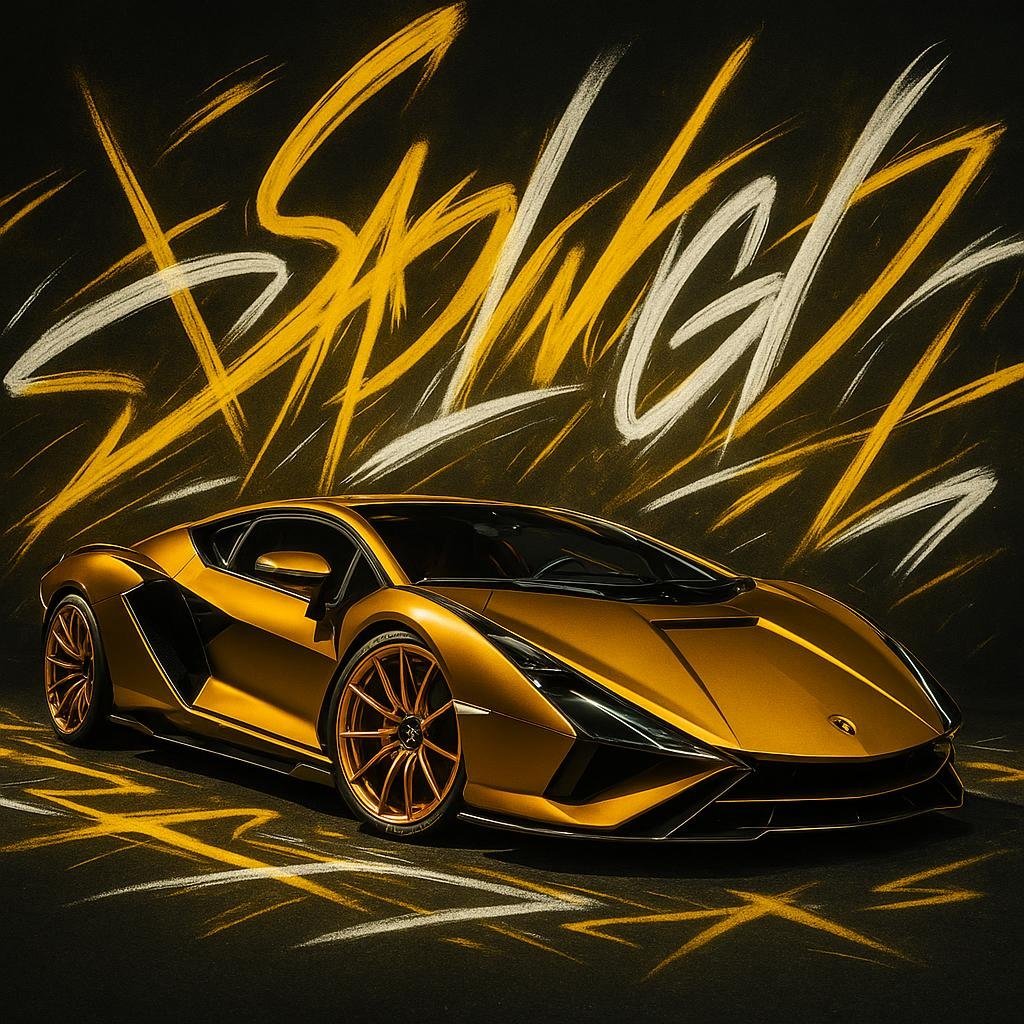
Lightning in a bottle—that’s the Lamborghini Sián FKP 37, the car that jolted the supercar world awake. If you’ve ever wondered how tradition and the future can collide at 220 mph, you’re in the right place.
The Lamborghini Sián FKP 37 marked a seismic shift for supercars. Lamborghini’s first hybrid production vehicles hook up the Italian brand’s legacy, pairing a 6.5-litre V12 with a wild supercapacitor system to unleash 819 horsepower.
When Lamborghini revealed it online on September 3, 2019, just before the Frankfurt Motor Show, the Sián FKP 37 proved you don’t have to sacrifice that signature Lamborghini drama for electrified performance. You can have both—raw combustion and a jolt of electric punch.
“Sián” means “lightning” in Bolognese dialect, which feels spot-on when the car’s speed blasts past 220 mph. And with only 63 ever built, it’s more than a car—it’s a bridge between Lamborghini’s roaring V12 past and its electrified tomorrow. It’s a nod to heritage, but it doesn’t look back for long.
Let’s dig into the Sián FKP 37’s origin story. From the minds that dreamed it up, to the lucky few who own it, this machine set a new template: supercapacitor energy, Countach-inspired design, and a driving experience that feels like science fiction. Plus, the market’s been wild since 2020—no surprise there.
| Category | Specification |
|---|---|
| Model | Lamborghini Sián FKP 37 |
| Production | 63 Coupés (plus 19 Roadsters) |
| Debut | September 3, 2019 (online), Frankfurt Motor Show |
| Name Meaning | Sián = “lightning” (Bolognese dialect); FKP 37 honors Ferdinand Karl Piëch (born 1937) |
| Engine | 6.5-liter naturally aspirated V12 |
| V12 Output | 774 hp @ 8,500 rpm |
| Electric Motor | 48-volt motor integrated into gearbox |
| Electric Motor Output | 34 hp |
| Combined Power | 819 hp (most powerful Lamborghini at debut) |
| Hybrid System | Supercapacitor-based mild hybrid |
| Supercapacitor Weight | 34 kg |
| Energy Advantages | 3× power density of li-ion battery of same weight |
| 0–100 km/h | Under 2.8 seconds |
| Top Speed | Over 350 km/h (220+ mph) |
| Drivetrain | AWD with rear mechanical self-locking diff |
| Chassis | Carbon-fiber monocoque |
| Aero Features | Active aerodynamics, heat-reactive cooling vanes, rear wing |
| Lighting | Y-shaped DRLs, hexagonal taillights |
| Interior | Poltrona Frau leather, 3D-printed components, customizable carbon vents |
| Fuel Consumption | 19.23 L/100 km |
| CO₂ Emissions | 447 g/km |
| Special Editions | Sián Roadster (19 units) |
| Notable Firsts | First production car with supercapacitors; first Lambo hybrid |
Development Backstory & World Debut
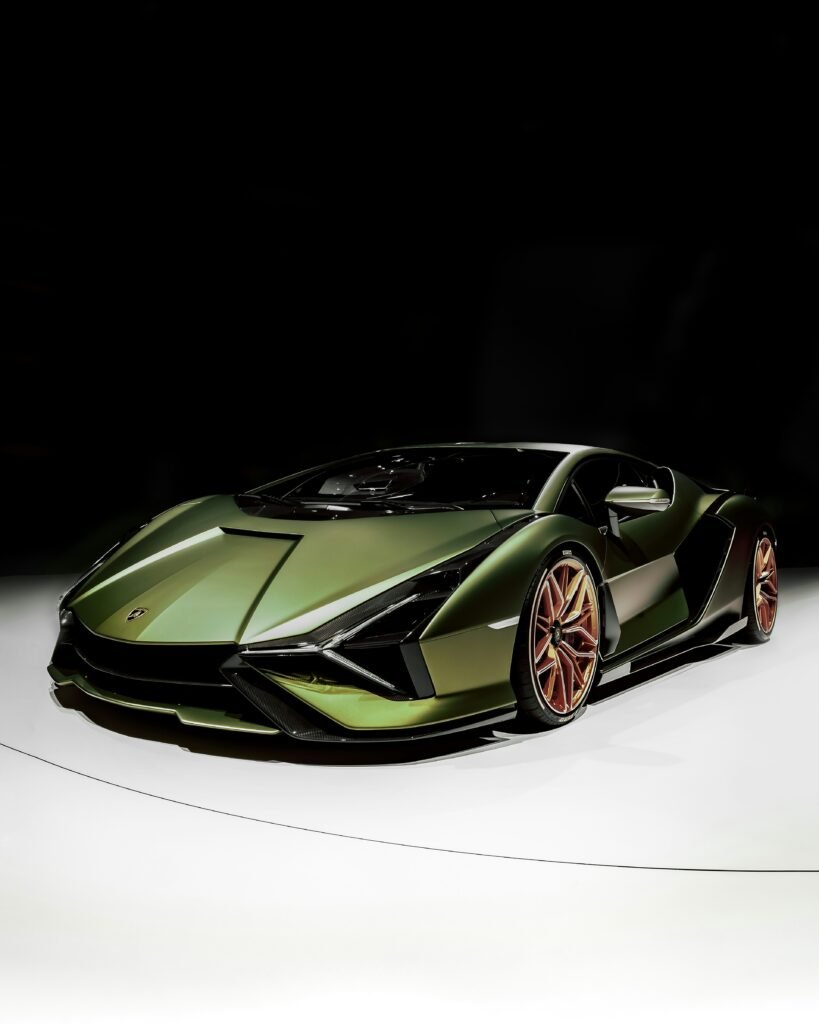
Lamborghini didn’t just dip its toes in the hybrid world—they cannonballed in. The Sián FKP 37 grew out of Lamborghini’s refusal to compromise on performance, even as the auto world shifted toward electrification. This car isn’t just another hybrid; it’s where old-school V12 thunder meets the future, and it debuted supercapacitor tech in a production car for the first time.
Origins and Rationale Behind the Sián FKP 37
Lamborghini built the Sián FKP 37 as its first hybrid production car to keep up with the times, but with a twist. Instead of going full electric or plug-in, they picked a mild-hybrid setup—lighter, faster, and truer to the brand’s DNA.
“Sián” translates as “lightning bolt”—a tip of the hat to its electric heart and its explosive speed. The FKP 37? That’s for Ferdinand Karl Piëch, the late VW Group chairman born in 1937, whose vision helped bring Lamborghini into the Volkswagen family. That move handed Lamborghini the keys to a tech treasure chest.
Lamborghini only built 63 of these, a wink to their 1963 founding. That exclusivity? It just adds to the legend.
Key Inspirations: From Countach to the Future
The Sián’s silhouette borrows from Lamborghini’s history but doesn’t get stuck in it. Designers leaned on the “Gandini line,” a visual signature from the original Countach, but they weren’t afraid to push boundaries.
Those wild Y-shaped headlights? They came straight from the Terzo Millennio concept—a car that first played with supercapacitors before they became reality in the Sián. Around back, the hexagonal tail lights echo the Countach again, but with a futuristic twist.
Here’s a party trick: Lamborghini used smart materials for the cooling fins. When things heat up, the vanes rotate automatically—no motors, just clever engineering—channeling air where it’s needed and keeping weight down. It’s the kind of detail you almost miss, but once you know, you can’t unsee it.
Debut at the Frankfurt Motor Show
Lamborghini dropped the Sián FKP 37 online on September 3, 2019, then rolled it out in the flesh at the IAA Frankfurt Motor Show. It stole the spotlight, no question.
They painted the debut car in Verde Gea green with Oro Electrum gold, using golden flakes and crystals for a finish that almost glowed. All 63 units? Gone in a flash. Collectors and fans couldn’t resist—proof that hybrid tech, done right, can still make hearts race.
Behind-the-Scenes Innovations and Firsts
The Sián was the world’s first production car with supercapacitor energy storage. Supercapacitors charge and discharge about three times faster than lithium-ion batteries of the same size. That’s not just fast—it’s game-changing.
The 48-volt electric motor, tucked right into the gearbox, puts out 34 horsepower. No other mild-hybrid had such a direct link between motor and wheels at launch, so you get instant power, especially during gear shifts. The V12 and electric motor combine for 819 horsepower—the most ever in a Lamborghini.
Lamborghini’s Centro Stile and Ad Personam teams even worked with Poltrona Frau to create a unique “Terra di Sant’Agata Bolognese” leather. And for the first time, they used 3D-printed parts in a production Lambo. That’s a lot of firsts for one car.
Name Significance & Key Contributors
There’s more to the Sián FKP 37 name than meets the eye. It honors regional roots and a pivotal figure in Lamborghini’s evolution. It’s a little dramatic, sure, but that’s Lamborghini for you.
Meaning Behind ‘Sián FKP 37’
“Sián” is Bolognese for lightning—a sharp, fitting metaphor for the car’s hybrid punch. It’s not just a nod to the tech, but a statement: this is Lamborghini’s first hybrid production car.
The “FKP 37” part? That’s all about Ferdinand Karl Piëch. His initials and birth year are right there in the name, a personal tribute to the man who made sure Lamborghini had the resources to dream big.
Ferdinand Karl Piëch and Influential Figures
Ferdinand Karl Piëch changed Lamborghini’s story in 1998 by pulling the brand under Audi AG (and thus Volkswagen Group). As chairman, he didn’t just save Lamborghini—he gave it the runway to innovate.
Lamborghini renamed the car at the 2019 Frankfurt Motor Show, right after Piëch’s passing. Without his leadership and VW’s deep pockets, the Sián’s supercapacitor hybrid system probably wouldn’t exist.
Engineering and Design Team’s Vision
Mitja Borkert, the chief designer, led a team inspired by Marcello Gandini’s iconic wedges and the Terzo Millennio’s wild ideas. They wanted something light, fast, and unmistakably Lamborghini.
Instead of heavy lithium-ion batteries, they went for supercapacitors—three times the power at the same weight. Maurizio Reggiani, Lamborghini’s CTO, pushed for a 48-volt electric motor in the gearbox, balancing weight and keeping the car razor-sharp.
Groundbreaking Powertrain & Performance
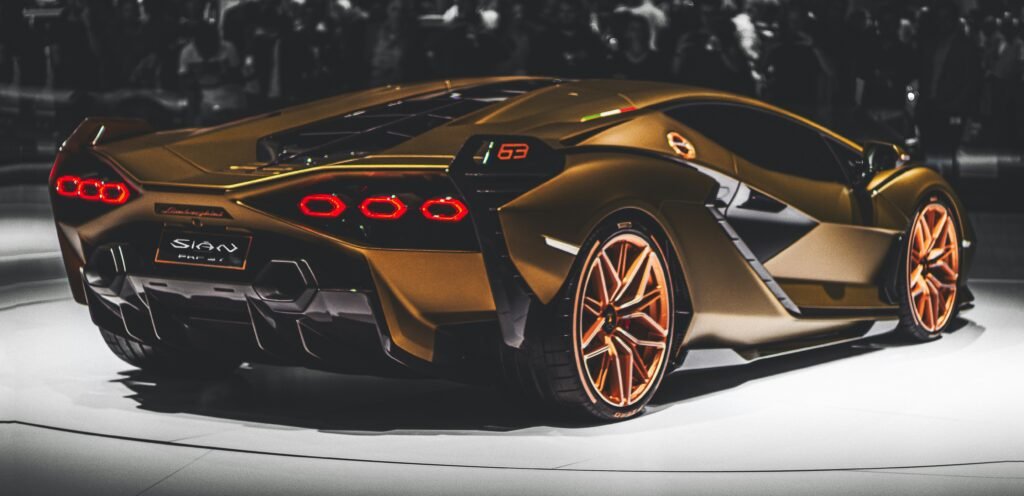
The Sián FKP 37 doesn’t just mix old and new—it fuses them. A 6.5-liter V12 teams up with a supercapacitor-driven electric motor, making this Lamborghini’s first real hybrid supercar. The result? 819 horsepower, delivered with a punch and without the usual hybrid baggage.
Hybrid Powertrain Architecture
The Sián’s mild-hybrid system runs on a 48-volt backbone, different from your average battery-based hybrid. The electric motor sits right in the gearbox, sending power straight to the rear wheels for instant torque. No lag, just go.
This 48V setup enables peak currents up to 600A, so energy moves fast—way faster than high-voltage battery systems. The power flow is balanced, both charging and discharging at the same pace.
Lamborghini kept weight low by choosing a supercapacitor over a traditional battery. It’s lighter and delivers three times more power per kilogram. Honestly, it’s a clever workaround for the usual hybrid weight penalty.
V12 Engine & Supercapacitor System
The 6.5-liter V12 churns out 785 horsepower at a screaming 8,500 rpm. Titanium intake valves and that classic Lambo wail? Still there, thankfully.
The 48-volt electric motor adds 34 horsepower, topping out at 819. The supercapacitor stores and releases energy in a blink, recharging quickly during braking. Compared to battery packs in other hybrids, this setup is lighter and more responsive.
This is the first time any production car used a supercapacitor-based hybrid system. The weight-to-power ratio is stunning—no wonder rivals took notice. For example, the Sián’s supercapacitor system weighs just 34 kg, while a comparable lithium-ion battery can tip the scales at over 150 kg, according to Lamborghini’s own data.
Acceleration, Top Speed, and Handling
Zero to 100 km/h? Under 2.8 seconds. Top speed? Over 350 km/h. It’s one of the fastest Lamborghinis ever, and you feel it every time you touch the throttle.
The car uses electronically controlled all-wheel drive and a rear mechanical self-locking diff. Rear-wheel steering sharpens handling at all speeds, making the car feel smaller and more agile than you’d expect.
Active aerodynamics, carbon-fiber monocoque, and instant torque from the electric motor all combine for a driving experience that’s as dramatic as it is effective. Gear changes feel seamless, with no loss of power thanks to the electric boost.
Innovations in Regenerative Braking
The Sián’s hybrid system grabs kinetic energy during braking and feeds it right back into the supercapacitor. Unlike batteries, supercapacitors take the charge instantly, so you get more out of every stop.
The power flow stays balanced—energy in, energy out, no fuss. Supercapacitors don’t overheat like batteries, so there’s no need for complicated cooling systems. It’s efficient and refreshingly simple.
Now, about those autonomous cooling vanes: they’re not just for show. The Sián FKP 37 uses smart materials that react to heat, opening the vent flaps on their own when exhaust temps climb. No electronics, no motors—just physics and a bit of magic. It’s a subtle touch, but it shows how far Lamborghini pushed the envelope.
Design Language: Exterior, Interior & Aerodynamics
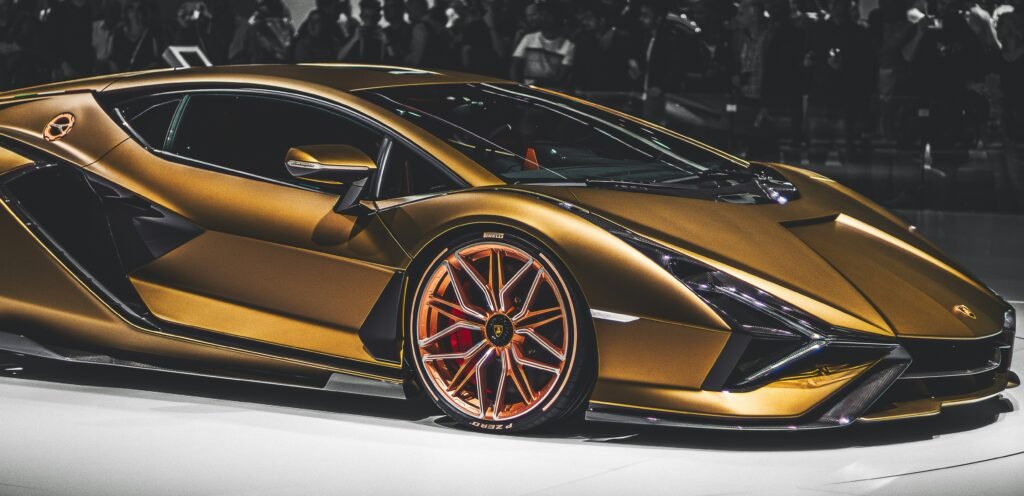
The Lamborghini Sián is a rolling homage to the past, but it’s also a lightning bolt aimed at the future. Its exterior channels classic shapes with a modern edge, and the interior? Pure luxury, with 3D-printed parts for that extra bit of bespoke cool. It’s not just a car—it’s a statement, and maybe even a prophecy for what’s next in Sant’Agata.
Exterior Styling and Aerodynamic Innovations
Lightning in carbon fiber—if you’ve ever wondered what that looks like, the Lamborghini Sián FKP 37 is the answer. It’s a car that doesn’t just turn heads; it spins them.
The Lamborghini Sián’s wedge-shaped body is a nod to Marcello Gandini’s iconic designs, but it also borrows futuristic cues from the Terzo Millennio concept. Here, every crease and fold isn’t just for show—Lamborghini’s engineers sculpted the body to slice through the air and look dramatic doing it.
Active aerodynamics? Absolutely. The fixed rear wing—stamped with a bold “63” for Lamborghini’s birth year—works with those massive side intakes and a carbon-fiber front splitter. The result? Downforce that glues the car to the tarmac at speed.
At the back, you’ll spot something wild: active cooling vanes crafted from smart materials. These vanes twist open automatically when things heat up, channeling extra air to cool the V12. No electronics here—the vanes rely on the material’s own heat sensitivity, which feels almost like magic.
Lamborghini added a transparent “Peroscopio” glass panel down the center of the roof. It slides back into the slatted engine cover, flooding the cabin with natural light and giving you a peek at the beast behind your head.
Signature Features: Y-Shaped Headlights & Lightning Motifs
Those Y-shaped daytime running lights? Straight from the Terzo Millennio playbook. They give the Sián an unmistakable glare—kind of like a superhero mask for the road.
Six hexagonal taillights at the rear echo the legendary Countach. It’s a clever way to blend Lamborghini’s heritage with a look that feels very now.
The original “Oro Electrum” (electric gold) launch color shouts the lightning theme—Sián literally means “flash of lightning” in Bolognese. The Roadster rolled out in Blu Uranus, but Verde Gea green quickly became a fan favorite. These bold hues scream hybrid tech and Lamborghini flair in equal measure.
Futuristic and Customizable Interiors
Inside, the Sián borrows the Aventador’s basic layout but updates it for a new decade. The center console? Much cleaner than before, with a portrait touchscreen borrowed from the Huracán Evo front and center.
Interior Materials:
- Supple leather from Poltrona Frau, an Italian furniture legend
- 3D-printed parts—a Lamborghini first
- Custom carbon fiber air vents, especially for the Roadster
Roadster buyers could even 3D-print their initials into the rear vents. That’s personalization at a whole new level—only 19 Roadsters exist, so each one feels like a fingerprint. The blend of old-school craftsmanship and bleeding-edge tech makes the cabin both opulent and forward-looking.
Driving Experience, Reviews & Community
The Lamborghini Sián FKP 37 doesn’t just drive—it erupts. The naturally aspirated V12 roars, but the hybrid tech adds a layer of instant torque that’ll make your heart skip.
With only 63 built, this hybrid supercar became a holy grail for collectors almost overnight. Automotive journalists can’t stop talking about it, and honestly, who can blame them?
Media and Owner Driving Impressions
The Sián FKP 37’s driving punch comes from a 6.5-liter V12 and a 48-volt electric motor, together pumping out 819 hp. The electric motor delivers torque straight to the rear wheels, filling in those tiny gaps when the gears shift.
Test drivers say the acceleration feels even more ferocious than in a standard V12 Lambo. The car rockets to 62 mph in under 2.8 seconds and keeps pulling past 220 mph.
Here’s where it gets interesting: the Lamborghini Sián supercapacitor vs battery debate. The Sián’s supercapacitor charges way faster than a typical lithium-ion battery, and it delivers power smoothly, lap after lap, without getting hot or tired.
Owners love that the V12’s soundtrack remains untamed, but the electric boost makes the power delivery freakishly smooth. Rear-wheel steering and those active aero tricks make the car feel surprisingly agile for something so wide and low.
Owner Demographics and Collector Community
The Lamborghini Sián FKP 37 is a magnet for collectors—usually those who already have a few unicorns in their garage. Lamborghini prioritized its most loyal customers for the allocation.
Why only 63? It’s a nod to Ferdinand Piëch’s 1937 birth year, which gives the car an extra layer of historical intrigue. Most Siáns sit alongside other rare supercars, more trophy than daily driver.
The tiny production run has created a close-knit, almost secretive circle of owners. Most cars barely see public roads, living their lives behind closed doors.
Notable Quotes from Designers and Journalists
Automobili Lamborghini calls the Sián “a technological tour de force, able to fire up incredibly strong emotions.” They love to point out how the hybrid system “delivers maximum power with minimal weight.”
The name Sián is Bolognese for “lightning,” which fits the car’s electric punch and 220+ mph top speed. Journalists see it as a bold leap for Lamborghini—combining a V12 with hybrid tech in a way nobody expected.
Experts can’t stop raving about the supercapacitor system. It’s three times more powerful than a battery of the same weight. That’s not just a party trick—it’s a whole new way to build a hybrid supercar.
Ownership Costs and Maintenance Factors
Owning a Sián isn’t for the faint of heart or wallet. You need Lamborghini-certified techs who know both V12s and hybrid systems inside out. The supercapacitor setup demands its own maintenance playbook, totally different from standard batteries.
Insurance? Sky-high. With only 63 cars out there, parts are scarce and expensive.
Fuel consumption sits at 19.23 liters per 100 kilometers, with CO2 emissions at 447g/km. That lands it in efficiency class G—so registration can get pricey in some countries.
Replacing tires, brakes, or carbon fiber bits means premium bills. Titanium intake valves and active aero parts just add to the complexity. If you want trouble-free ownership, this probably isn’t your daily commuter.
Roadster and Special Editions
Lamborghini didn’t stop at the coupe. The Sián Roadster landed soon after, keeping the same 819-horsepower hybrid punch but swapping in sky above your head. Only 19 Roadsters exist, so good luck spotting one in the wild.
Every Sián—coupe or roadster—could be customized via Lamborghini’s Ad Personam program. Buyers chose from exposed carbon fibre, wild paint colours, and bespoke interior materials. They even developed a special “touch and feel” leather just for this model.
The “FKP 37” badge is a tribute to Ferdinand Karl Piëch, the VW Group visionary. The 37? That’s his birth year—another neat historical touch.
Lap Records and Prestigious Awards
The Sián FKP 37 grabbed headlines for its tech innovation rather than lap times. As Lamborghini’s first supercapacitor-based hybrid, it turned the industry’s head. The supercapacitor system, again, is three times more powerful than a battery of the same mass—a data point Lamborghini loves to repeat.
Media outlets praised the 48-volt mild-hybrid setup for its efficiency. It delivers 34 hp straight to the rear wheels and recharges under braking, keeping power delivery symmetrical and avoiding the overheating headaches that plague traditional batteries.
The Sián FKP 37 autonomous cooling vanes explanation is almost sci-fi: these smart-material flaps react to heat and open by themselves, no electronics needed. It’s a world-first feature that feels like a living, breathing part of the car.
Key Competitors in the Supercar Realm
The Sián plays in a rarefied league. Ferrari’s SF90 Stradale packs a 986-hp plug-in hybrid punch, but takes a different route to electrification. McLaren’s Speedtail aims for outright speed, using a hybrid setup for 1,036 hp.
The Aventador SVJ gave the Sián its bones, sharing the V12, but the Sián’s hybrid system and exclusivity put it on a whole other planet. Porsche’s 918 Spyder broke ground for hybrid hypercars, but by 2019, the Sián brought supercapacitor tech into the spotlight.
Aston Martin’s Valkyrie and Mercedes-AMG One bring F1 DNA to the street, though both have struggled with delays. The Sián, meanwhile, actually reached customers—sometimes being first counts for a lot.
Brand Impact, Legacy, and Market Value Evolution
The Sián marked a real shift for Lamborghini. It proved that hybrid tech doesn’t have to dilute the brand’s wild V12 soul—it can enhance it. That lesson is already shaping future models.
Values have shot up well above the original sticker price. With just 63 coupes and 19 roadsters, scarcity is baked in. Auction results show these cars fetching dramatic premiums.
As the first production Lamborghini with supercapacitor energy storage, the Sián’s place in history is secure. It’s a bridge between the analog thunder of old and the electric future looming ahead. As regulations tighten, the Sián stands as a snapshot of a brand at a crossroads—part tradition, part revolution.
Lamborghini’s reputation for innovation got a serious boost from the Sián. It’s proof that the company can evolve without losing its identity. That’s a legacy worth celebrating—and, honestly, it makes you wonder what’s next.
Final Words
The Lamborghini Sián FKP 37 stands as a bold milestone, merging iconic V12 heritage with groundbreaking hybrid innovation. Its supercapacitor technology, visionary design, and limited production status secure its place as a rare automotive triumph that redefines what a modern performance masterpiece can be for future generations of enthusiasts worldwide.
Thanks for reading! If you enjoyed this deep dive, be sure to subscribe to my email list for exclusive car reviews, insider tips, and weekly special offers on car parts, auctions, and gear — perfect for any car enthusiast.
If you have any thoughts or experiences with this car? Leave a comment below — I love hearing your opinions and sparking conversations with fellow enthusiasts.
And don’t forget to read related posts for more great content!
Frequently Asked Questions
The Lamborghini Sián FKP 37 left people buzzing when it debuted as the brand’s first hybrid supercar in 2019. With its supercapacitor technology and ultra-limited run of just 63 units, the Sián marks a turning point for Lamborghini—one that’s still sparking questions and debate among fans and collectors alike.
What drove Lamborghini to create the Sián FKP 37, and how does it fit within their brand legacy?
Picture this: Lamborghini, a brand built on drama, thunder, and pure V12 muscle, decides to go hybrid. Not to go green for the sake of it, but to prove that electrification can be all about adrenaline.
Lamborghini created the Sián FKP 37 to show the world that hybrid technology could actually crank up performance, not water it down. The company faced stricter emissions rules, but they weren’t about to let go of their beloved naturally aspirated V12 engines just yet.
The first hybrid production vehicle from Lamborghini became a wild experiment that somehow managed to bridge old-school soul and futuristic tech. The FKP 37 name? That’s a nod to Ferdinand Karl Piëch, the late VW Group chairman who helped Lamborghini join the VW family. “37” marks his birth year—1937. A bit sentimental, but that’s Lamborghini for you.
Can you delve into the backstory of the Lamborghini Sián FKP 37’s development journey?
The crew at Sant’Agata Bolognese wanted a hybrid system that felt like an upgrade, not a compromise. They ditched the usual lithium-ion battery route—too heavy, too mainstream. Instead, they went for supercapacitors.
This wasn’t just a quirky choice. Supercapacitors let the car charge and discharge energy three times faster than traditional batteries. That’s not marketing fluff; it’s physics.
They set up a 48-volt mild hybrid system, with the electric motor sending torque straight to the rear wheels. During braking, the car snags energy and feeds it back into the supercapacitor. It’s a neat, almost poetic loop—use, recover, repeat.
What were the key inspirations behind the design and engineering of the Sián FKP 37?
Design-wise, the Sián FKP 37 is a love letter to the Countach, all razor-sharp lines and wild angles. Mitja Borkert, the Chief Design Officer, led the charge on this one.
The Terzo Millennio concept car inspired the headlight signature—a bold, almost sci-fi look that’s set to influence future Lambos. The body? Pure carbon fiber, because why not go all-in on lightness and strength?
There’s an electrochromic roof, so you can play with transparency at the touch of a button. Out back, the engine hood bristles with autonomous cooling vanes—no sensors, no wires. These smart materials just react to heat, opening up when things get spicy, all on their own. It’s like the car’s breathing.
How was the Lamborghini Sián FKP 37 received at its debut event, and what were the initial public and critical reactions?
Lamborghini dropped the Sián FKP 37 online on September 3, 2019, and the internet basically lost its mind. Collectors and car journalists swarmed the announcement, especially when they learned Lamborghini had swapped out heavy batteries for supercapacitors.
They only made 63 of these, which instantly made them unicorns. Every single car was spoken for before the public even saw it. Critics loved that Lamborghini used hybrid tech to boost performance, not just shave off a few grams of CO₂. It was a hybrid with an attitude.
Are there any remarkable stories or world-first achievements associated with the Sián FKP 37 that enthusiasts should know about?
The Sián FKP 37 is the first production car with supercapacitor energy storage—a real milestone. It’s also the first super sports car to pair a V12 with a hybrid system based on supercapacitors. That’s not just a technicality; it’s a leap forward.
Lamborghini’s supercapacitor approach means the Sián FKP 37 can deliver and recover energy way faster than any battery of similar weight. For example, the supercapacitor weighs just 34 kg but packs three times the power of a lithium-ion battery in the same space. That’s a stat worth bragging about.
There’s also those autonomous cooling vanes. They use temperature-reactive materials to open up when the exhaust gets hot—no electronics, just smart engineering. It’s as if the car has a mind of its own, keeping itself cool under pressure.
Who were the pivotal figures in the design and engineering team of the Lamborghini Sián FKP 37, and what were their contributions?
Mitja Borkert, the design chief, kept the Sián unmistakably Lamborghini while nudging it toward the future. You’ll spot Y-shaped lights and hexagons everywhere—inside and out. It’s a subtle nod to the brand’s DNA, but with a twist.
Maurizio Reggiani, the tech boss back then, steered the engineering team. They cooked up the supercapacitor hybrid system and tied it seamlessly to the V12. His crew also worked their magic on active aerodynamics and rear-wheel steering, making the Sián feel agile and planted at speed.
How does the Sián FKP 37’s engine and performance specifications set it apart from other supercars?
Let’s talk numbers—because that’s where the Sián FKP 37 really flexes. The 6.5-liter naturally aspirated V12 belts out 774 horsepower at a screaming 8,500 rpm. The hybrid system’s electric motor chips in another 34, so you’re looking at 819 horsepower total.
Zero to 62 mph? It’ll do it in under 2.8 seconds. Top speed? Over 217 mph, with instant torque filling the gaps between gear changes. No lag, just relentless acceleration. It’s wild, honestly.
What distinguishes the exterior design of the Sián FKP 37, and how does it enhance the car’s aerodynamics?
The exterior isn’t just for show—every crease and vent has a job. Active aerodynamics use smart materials, so surfaces move when needed, cutting drag and boosting downforce without extra weight or complexity.
The carbon fiber monocoque keeps things stiff and light. The rear diffuser and active wing manage airflow, while the front splitter channels air around the wheels. It’s almost like the whole car is sculpted by the wind itself.
Could you describe the interior features of the Sián FKP 37 that combine luxury with functionality?
Inside, you get a blend of Italian flair and cutting-edge tech. Y-shaped motifs and hexagonal patterns tie the cabin together—it’s subtle, but it works. Lamborghini even developed a new leather for the seats, just to make sure it feels as good as it looks.
The cockpit is all about the driver. Controls sit right where you want them, and the digital displays give you the essentials without turning the dash into a spaceship. Long drive? No worries—the seats and layout actually make it comfortable, which isn’t always the case in supercars. It’s a rare blend of luxury and performance focus.