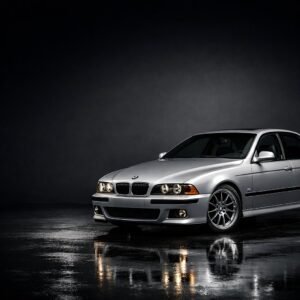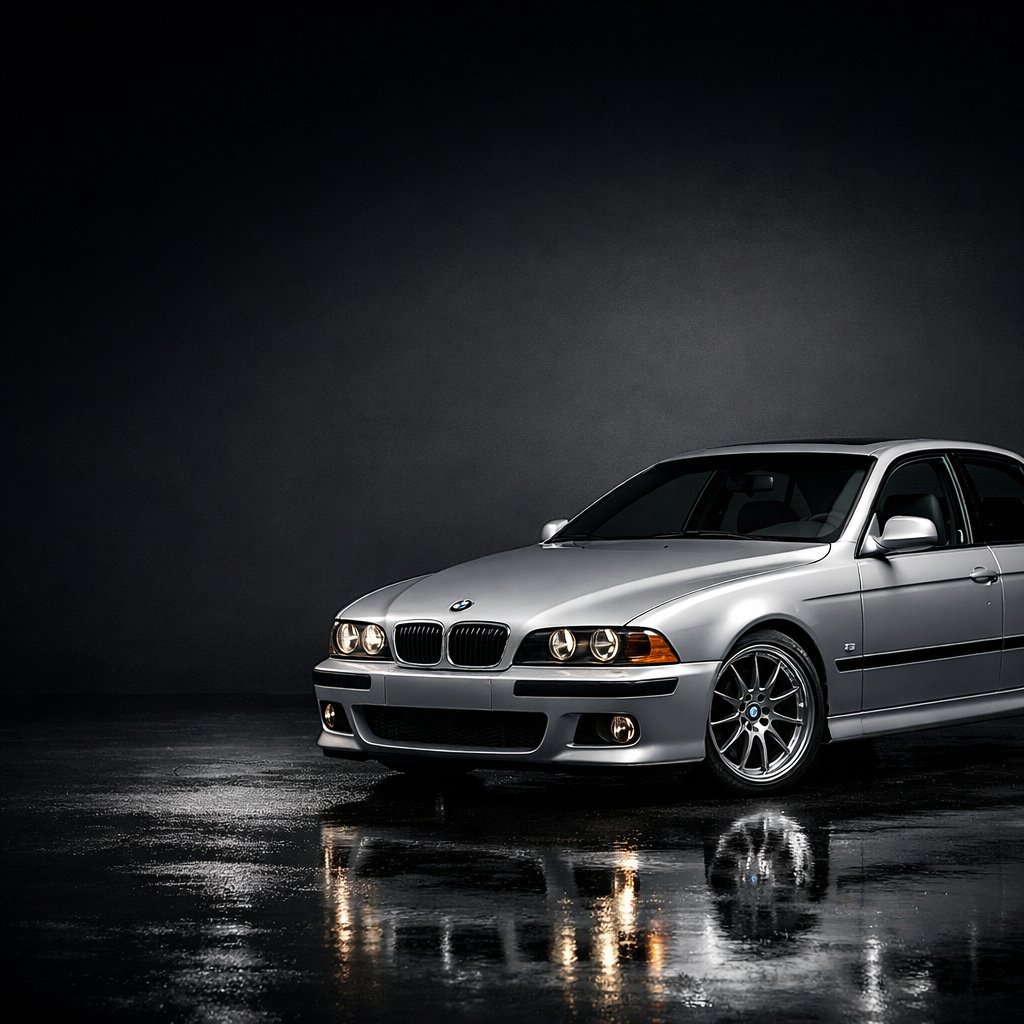
There’s something quietly thrilling about the BMW 5 series E39, especially the M5. It’s gone from a depreciating executive sedan to a modern classic, with clean examples now selling for $35,000 to $60,000.
This car is the final generation of naturally aspirated V8 M5 with a manual transmission. That alone makes it special—no forced induction, no excessive electronic interference, just pure analog driving from a time before the market changed forever.
BMW built about 20,000 E39 M5s worldwide from 1999 to 2003. Only 2,500 made it to the UK, which is a small slice of the total.
The investment value of the 5 series E39 is rooted in its irreplaceable formula. The 4.9-liter S62 V8 delivers 394 horsepower, and you only get it with a six-speed manual.
That’s a combo we just don’t see anymore, thanks to emissions rules and shifting market priorities. Prices have climbed steadily from their mid-2010s lows of £20,000. Post-2001 cars fetch the highest prices, often for good reason.
Today’s market shows solid fundamentals. The E39 M5 strikes a balance between performance and everyday usability that later M5s lost in pursuit of bigger numbers and more tech.
Limited production, cars lost to neglect or mods, and nostalgia from buyers who wanted these new all add up to strong demand. Well-kept examples are getting harder to find, and that’s driving up prices.
What Makes the E39 M5 Stand Out as an Investment?
- The BMW E39 M5 (1999-2003) is the last naturally aspirated V8 M5 with a manual transmission—about 20,000 built globally.
- Current prices range from $35,000 to $60,000, up from $20,000 in the mid-2010s. Post-2001 models are especially sought after.
- Scarcity, high attrition, and the analog driving experience make for a strong investment thesis.
- BMW built roughly 20,000 E39 M5s worldwide, with 2,500 to the UK and around 9,000 to North America.
- Clean cars trade from $35,000 to $60,000, with post-2001 models getting premiums for updated features.
- The E39 M5 has appreciated about 8-12% annually over the last decade. Well-maintained examples that sold for $20,000 in 2015 now reach $40,000-$50,000.
- Main risk: S62 V8 maintenance isn’t cheap. VANOS repairs can cost over $3,000, and a proper service history is non-negotiable if you want to avoid headaches.
- This is the last M5 with a naturally aspirated V8 and manual only—the last of its kind before electronics and turbos became standard.
For me, the investment story is about nostalgia meeting real scarcity. Many have been lost to accidents or mods. Post-2001 cars with full service records are the safest bet for appreciation. Early cars can be had for less, but you’re taking on more risk.
Finding one under $40,000 is tough now, and that window is closing as more collectors and younger buyers get interested.
How Is the E39 M5 Priced in Today’s Market?
The E39 M5 sits in a unique spot—it’s the most affordable way to own a hand-built V8 M car. Prices start around $25,000 for high-mileage examples and go up to $45,000 for exceptional ones.
There’s a clear hierarchy: mileage, documentation, and originality drive value. The sweet spot for investment-grade cars is $32,000 to $40,000.
How Are E39 M5s Selling at Auction?
Bring a Trailer is the main stage for E39 M5 transactions now. Sales data from 2024-2025 shows well-documented cars with under 80,000 miles often sell for $35,000 to $42,000.
For example, a Carbon Black M5 with 52,000 miles went for $41,500 in January 2025. A Silver Grey with 127,000 miles sold at $28,000. Low-mileage, single-owner cars with full records get a 25-30% premium over higher-mileage ones. Buyers in California and the Northeast tend to pay 8-12% more than those in other regions.
What’s the Price Range by Condition?
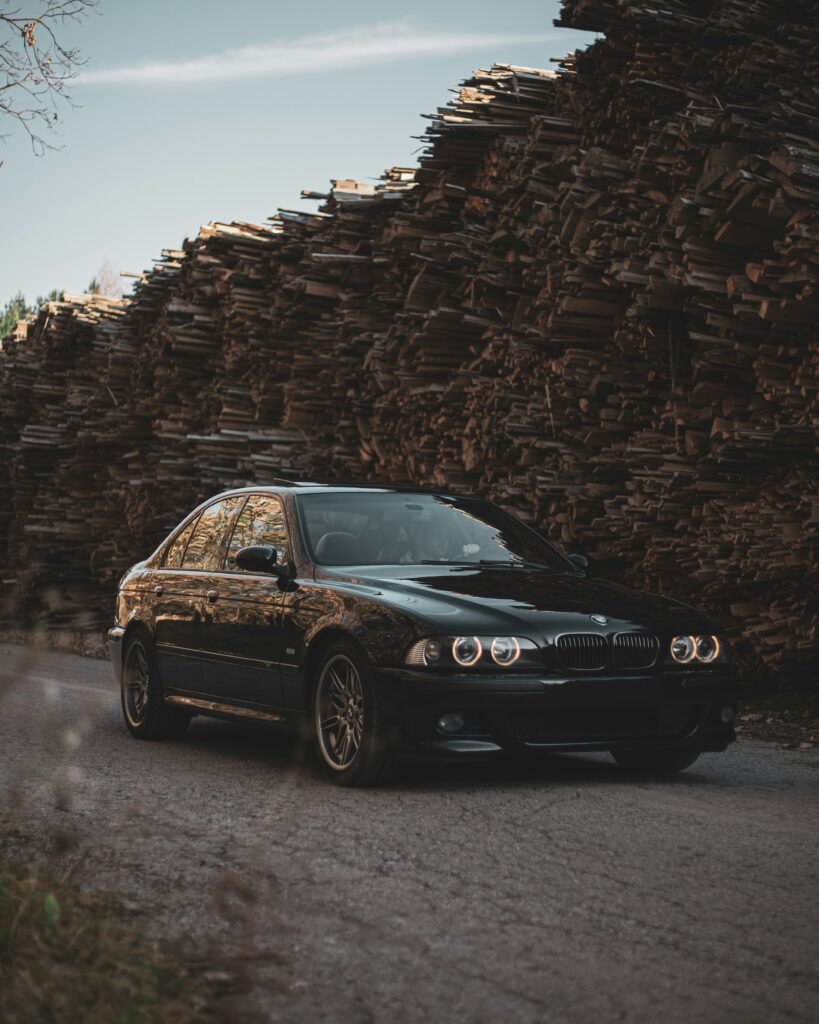
You’ll pay about $28,000 for a clean E39 M5 with 100,000-150,000 miles and decent records. Good mid-mileage cars (60,000-100,000 miles) trade for $32,000 to $38,000. The best—under 50,000 miles, single owner, full history—can reach $40,000 to $45,000.
Current Market Pricing:
- High mileage (120k+ miles): $25,000-$30,000
- Average condition (80k-120k miles): $30,000-$35,000
- Above average (50k-80k miles): $35,000-$40,000
- Exceptional (under 50k miles): $40,000-$48,000
The BMW E39 M5 is still accessible compared to its successors. The E60 M5, with its V10 headaches, trades in similar territory, but I’d take the E39 every time.
How Does the E39 M5 Compare to Modern Alternatives?
The E39 M5 costs less than modern performance sedans but matches them in capability. A new BMW M3 starts at $75,000—almost double the price of a top E39 M5. Even used AMG or Audi Sport sedans cost $55,000 to $70,000.
In its own vintage segment, the E39 M5 trades at a 40% discount to the E60 M5, despite the E60’s notorious maintenance issues. American V8 stick-shift sedans like the Pontiac G8 GXP and Chevrolet SS now fetch over $45,000 for clean examples. The E39 offers German engineering and build quality at a better price. Hagerty puts a #3-condition E39 M5 at $36,400, which fits with current auction results.
How Rare Is the BMW E39 M5?
BMW built exactly 20,482 E39 M5s from 1998 to 2003. That’s fewer than many realize, and it’s a key part of the investment story.
The North American market got 9,992 units—nearly half. Europe and other regions split the rest.
How Did Production Break Down by Year and Market?
Production started in 1997 with a prototype. 678 cars were built in 1998, and output peaked in 1999 with 5,425 units.
From 2000 to 2003, BMW made about 14,378 more, averaging 3,595 per year. The split matters: European left-hand drive cars were 7,895 units (39%), right-hand drive just 2,595 (12%), and North American spec 49% of the total.
Were There Any Variants or Options?
Nope. Every E39 M5 got the same 4.9-liter S62 V8 and six-speed manual. No automatic, no Competition Package, nothing to dilute the formula. That’s a plus for collectors.
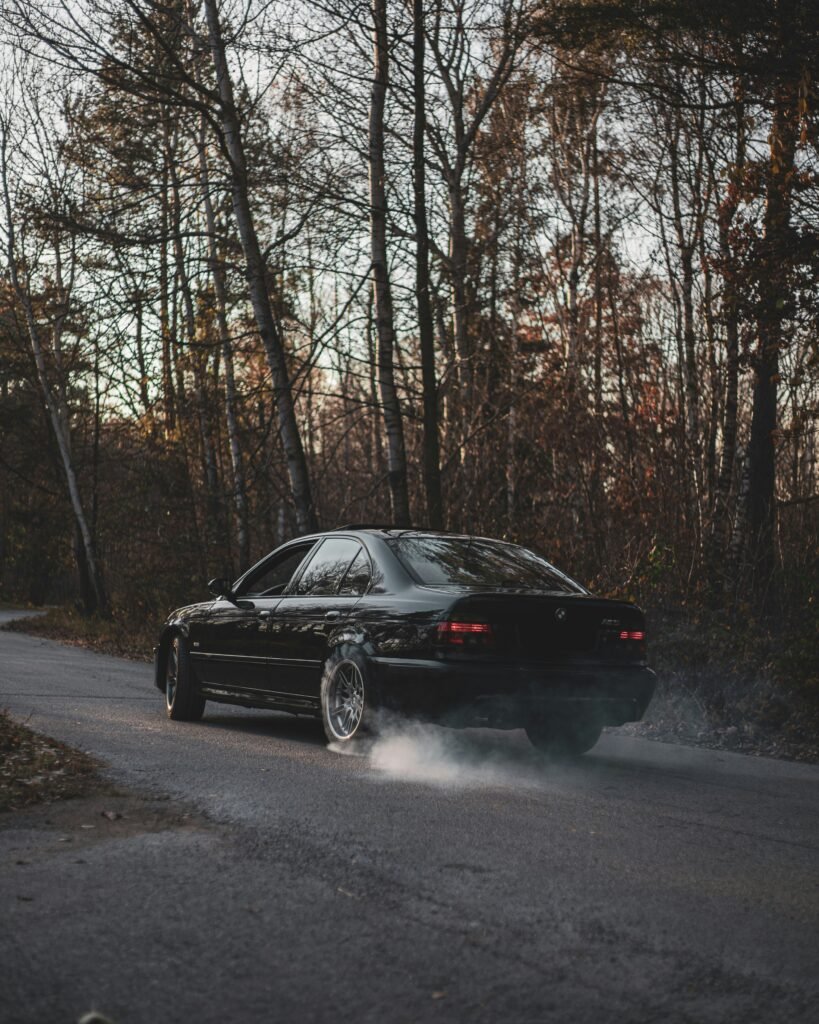
Color choices varied, though. Le Mans Blue and Carbon Black made up 22% each. Jet Black was next at 16%. Alpine White and Imola Red were about 10% each. Titanium Silver was 8%, and rare colors like Silverstone Metallic and Oxford Green were just 4% each. Anthracite and Royal Red Metallic were extremely rare—roughly 410 units each worldwide.
How Many Original Cars Survive?
Exact numbers are tough to pin down. Many high-performance sedans get neglected or modified after depreciation, and plenty have been scrapped.
Market watchers estimate fewer than 60% of North American E39 M5s survive in original, documented condition. Europe’s numbers are similar. True collector-grade cars with full history and original paint? Maybe 15-20% of the total—so around 3,000 to 4,000 worldwide.
Has the E39 M5 Appreciated Over Time?
The E39 M5 has steadily gained value since hitting its bottom in the early 2010s. What was once a used luxury sedan is now a sought-after classic, with some specs commanding more than their original sticker price (adjusted for inflation).
Value Progression Table
| Year | Average Market Value | Notable Factors |
|---|---|---|
| 2000 (MSRP) | $78,500 | Launch price for US market |
| 2005 | $42,000 | Standard luxury car depreciation |
| 2010 | $24,000 | Depreciation trough period |
| 2015 | $28,000 | Early recognition of collectability |
| 2020 | $42,000 | Pandemic-era collector car surge |
| 2026 | $52,000 | Current average for documented examples |
After production ended, the E39 M5’s value hit a low about a decade later. Clean cars with records sold between $20,000 and $28,000 from 2010 to 2014. Post-2001 models with updated headlights always carried a slight premium.
Now, top examples exceed $60,000. Appreciation picked up after 2015 as the E39 M5 became a cult favorite among enthusiasts who saw it as the last analog M5.
Annualized Return Benchmarking
Between the 2010 market low and projected 2026 values, the BMW 5 series E39 M5 has delivered an annualized return of about 5.1%. This is based on a typical example with solid service records, moving from $24,000 to $52,000.
Top-tier post-2001 models, which sold for $32,000 in 2015 and now fetch $58,000, have seen annualized returns of 10.4% over the last 11 years. If you find an original-condition car with fewer than 50,000 miles, expect even better results—these have outperformed the market average.
The sharpest value jump happened from 2018 to 2022, with prices up 48%. Collectors started to appreciate the BMW E39 M5’s engineering purity, and that recognition drove demand. Modified cars haven’t kept pace; they tend to trail stock examples by 20-30% in appreciation.
How Does the E39 M5 Compare to the S&P 500?
The S&P 500 returned about 10.2% annually from 2010 to 2026, which beats the average E39 M5 by roughly five points. But context matters—timing and the specific car make a big difference.
If you bought a premium example in 2015, you likely matched or even beat the S&P, all while owning something you can actually drive. That’s not a minor point for enthusiasts or investors who want a tangible asset.
The E39 M5 also sidestepped the 2022 equity market correction. Classic car prices stayed flat or kept rising, showing a lower correlation with stocks—useful for portfolio diversification.
| Asset | 2010 Value | 2026 Value | Annualized Return |
|---|---|---|---|
| BMW E39 M5 (mid-grade) | $24,000 | $52,000 | 5.1% |
| BMW E39 M5 (post-2001, low miles) | $32,000 (2015) | $58,000 | 10.4% |
| S&P 500 Index | 1,115 | 4,200 | 10.2% |
What Drives the E39 M5’s Value?
The BMW 5 series E39 M5’s price growth comes from three main things. First, it’s got the hand-built S62 V8, which was the last naturally aspirated V8 sedan from BMW M. Second, it marks the end of the analog era—this was before electronic nannies took over. Third, it’s widely seen as the definitive sport sedan of its time.
Why Is the E39 M5’s Engineering So Respected?
The S62 4.9-liter V8 was assembled by a single technician at BMW’s M facility in Garching. The engine even got a signature plaque. It made 400 horsepower and could rev to 8,250 rpm—no turbo, just pure mechanical magic.
It used double-VANOS, individual throttle bodies, and a free-flowing exhaust. Torque peaked at 369 lb-ft at 3,800 rpm, so power delivery felt smooth and predictable.
The only transmission was a six-speed manual—no automatics at all for North America or Europe. The Getrag 420G gearbox worked with a variable M differential lock, sending power where it was needed most.
Is the E39 M5 Really the Last of Its Kind?
Yes. BMW never made another naturally aspirated V8 M sedan after the E39. The F10 M5, launched in 2011, switched to a twin-turbo 4.4-liter V8. Every M5 since has used forced induction.
The E39 M5 is the last stand for BMW M’s old-school philosophy—high-revving, naturally aspirated engines that keep the driver at the center. Later turbocharged cars just don’t have the same throttle response or sound.
Collectors see the S62 V8 as a milestone, much like Porsche’s last naturally aspirated GT3s. That’s a big reason for recent price jumps.
Does Culture Matter for the E39 M5?
The E39 M5 was Motor Trend’s Best Sport Sedan in 2000. It was also the hero car in BMW’s The Hire film series, which brought it mainstream attention. Those films reached millions and definitely added to the car’s mystique.
BMW’s strategy at the time was all about premium performance. The E39 M5 was the ultimate showcase for what the brand could do. It never had a big motorsport presence, but on the road, it set the benchmark for rivals for years.
Which Specs and Options Matter Most for Investment?
Some configurations add real value to the BMW E39 M5. Color is the biggest factor, followed by options and market spec.
Which Factory Colors Command Premiums?
Most E39 M5s are black—Black Sapphire Metallic and Carbon Black Metallic make up about 40% of production and trade at baseline. Le Mans Blue Metallic gets a 15-20% premium, thanks to its rarity and BMW M heritage. Only about 8% of cars left the factory in this color.
Imola Red II is even rarer—less than 2% of production—and adds 25-35% to values for clean cars. Silver Grey Metallic and Titanium Silver Metallic are middle of the pack, trading 5-10% above black. Darker colors show paint flaws more, which can be a headache for owners.
Does Transmission Choice Affect Value?
All E39 M5s came with a six-speed manual. No automatics, period. That means no transmission-based premiums, but if the gearbox is modified or damaged, expect a 30-50% price drop.
Having documented transmission service adds 5-8% to value, since the Getrag 420G needs specific care. Original shift knobs and boots in great shape can add another 2-3%.
Do Options and Packages Matter?
Most performance features were standard. Quad exhaust tips and rear spoiler were on every car, so they’re not value drivers. Navigation was in about 60% of US cars, but it’s outdated now and doesn’t add value.
Harman Kardon audio adds 2-3%. Extended leather on the dash and doors can bump value by 8-12%. Heated seats matter a bit more in cold climates—add 3-5% if paired with the cold-weather package.
How Does Market of Origin Affect Value?
European-spec cars have 5 more horsepower (400 PS vs. 395 hp) but sell for 10-15% less in the US. That’s mostly due to parts and service challenges. US-market cars are easier to maintain and have clearer histories.
Some collectors like the European bumpers and lights, but it rarely adds more than 5% to value. Right-hand-drive UK cars sell for 20-30% less in left-hand-drive markets—tough to resell outside the UK.
Is the E39 M5 still a strong investment in 2026?
The BMW E39 M5 remains desirable, but the window for easy appreciation is narrowing. Prices rose sharply from 2017 to 2022, but have since plateaued. Condition and provenance matter more than ever. I believe the best examples—low mileage, original paint, full history—still have upside, but average cars may just track inflation or lag behind.
With rising maintenance costs and the threat of parts scarcity, it’s not a hands-off investment. If you’re passionate about the BMW 5 series E39, the ownership experience can justify the risk. For pure financial return, there are safer bets, but few offer this blend of driving pleasure and collector cachet.
What should investors do now?
Focus on well-maintained, original E39 M5s with complete records. Avoid cars with patchy histories or obvious modifications. Budget for ongoing maintenance—don’t expect running costs to decrease with age.
If you’re already holding, keep documentation meticulous and stay proactive with preventive care. For new buyers, I suggest patience and a willingness to walk away from anything less than the best. The E39 is special, but it’s not immune to the realities of age and supply.
Final Words
The BMW E39 M5 represents a rare intersection of analog driving feel, everyday usability, and long-term enthusiast demand. As modern performance sedans move further toward electrification and automation, cars like the E39 M5 stand out as irreplaceable artifacts from a purist era. With clean examples becoming harder to find and values showing resilience, it remains one of the most compelling enthusiast sedans still accessible under the $40K mark—for now.
If you have any thoughts or experiences with this car? Leave a comment below — I love hearing your opinions and sparking conversations with fellow enthusiasts and collectors.
And don’t forget to read related posts for more great content!
This article is for informational and educational purposes only and does not constitute financial, investment, or legal advice.
Frequently Asked Questions
The BMW E39 M5 raises a lot of questions for investors and enthusiasts. Here are some direct answers based on current data and my own experience in this market.
Why Is the BMW 5 Series E39 M5 an Attractive Investment?
The E39 M5 is the last naturally aspirated V8 M5, and the final M car before electronic aids became standard. Built from 1998 to 2003, it represents a time when BMW put the driver first, not just compliance or efficiency.
It set the template for modern performance sedans, with a hand-built S62 V8 making 394 hp and a subtle, understated look. The 2001 facelift brought Angel Eye headlights and other upgrades—those later cars are now the most sought-after.
BMW made about 20,000 E39 M5s worldwide. Only 2,500 went to the UK, so scarcity is real, especially for right-hand-drive examples.
What Are Current Market Values for Well-Maintained and Average E39 M5s?
Post-2001 examples with great service history trade between £35,000 and £60,000. The best cars with low miles and original specs hit the top of that range.
Older, pre-2001 cars without Angel Eyes usually sell for £25,000 to £40,000, depending on condition and documentation. The market clearly pays up for the visual and technical improvements of later cars.
Cars that sold for £20,000 in the mid-2010s are now much more valuable, regardless of mileage. These days, originality and service history matter more than the odometer.
Modified cars lag behind. Collectors want original, factory-spec examples, and the gap is only getting wider.
How Rare Is the BMW E39 M5 Today?
Although 20,000 were built, many have been lost to poor maintenance, modifications, or accidents. Realistically, the number of clean, original cars is shrinking fast.
The UK only got 2,500 right-hand-drive cars, which is just 12.5% of total production. These fetch premiums in the UK, but are tough sells elsewhere.
US cars were the largest group, but often have higher mileage and variable maintenance. European cars sometimes fare better, as owners tend to preserve them more carefully.
More pristine cars are disappearing into private hands, not the open market. That’s shrinking available supply and pushing prices up for the best examples.
How Does the E39 M5’s Investment Performance Stack Up to the S&P 500?
Prices for the E39 M5 bottomed out in the mid-2010s, then started climbing. A car bought for £20,000 in 2015 might sell for £35,000 to £45,000 now—so roughly 75% to 125% appreciation over a decade.
That’s about 5.7% to 8.4% annualized before factoring in costs. The S&P 500 did about 12% per year, including dividends, over the same period.
The E39 M5 acts as a diversification play—it’s not tied to the stock market, and values depend more on collector demand and rarity. But you have to factor in insurance, maintenance, storage, and wear—those costs eat into returns.
Which Specs or Configurations Add the Most Investment Value?
Post-2001 cars with Angel Eyes and technical updates get 15-25% premiums. That’s the biggest single factor in today’s pricing.
Factory colors matter—Carbon Black and Le Mans Blue are most desirable, while silver and gray are average. All E39 M5s came with a six-speed manual, so there’s no transmission split to worry about.
Originality and documentation count for a lot. Cars with full books, tools, service records, and factory spec will always get top dollar, even with higher mileage.
What are the potential risks associated with investing in a BMW E39 M5?
The VANOS system on the BMW 5 series E39, especially the 2003 BMW E39 M5, is a well-known weak point. It’s prone to failure without regular, specialized maintenance. Repair bills typically land between £1,500 and £3,500, depending on what’s needed.
Comprehensive maintenance costs reflect supercar-level engineering rather than standard sedan expenses. Brakes, suspension, and those sticky, high-performance tires—none of it comes cheap. These expenses can catch even experienced owners off guard, and they absolutely affect the investment value.
Honestly, if you’re comparing the E39 to the E60 M5, the latter’s V10 offers more power and newer tech. Some buyers might chase the E60’s specs instead, especially since prices overlap. But the E39 has a different appeal—less about numbers, more about feel and analog driving.
There’s also a market saturation risk. As prices climb, more owners are tempted to sell. With roughly 20,000 E39 M5s built, it’s not ultra-rare. That could limit future scarcity premiums.
Parts availability is becoming a real issue. As the BMW E39 ages past 25 years, BMW is discontinuing more components. Aftermarket support exists, but it’s patchy, and some systems just won’t be supported forever. This is a significant concern if you’re holding for long-term appreciation.
How do the running costs and reliability affect investment value?
Running costs on the E39 M5 are high—there’s no getting around it. Even basic maintenance outpaces most cars from the same era. You’ll pay for that S62 V8’s complexity and the car’s unique components.
Reliability is good if the car’s been cared for, but deferred maintenance is common. Unsorted examples can be money pits. In my opinion, a well-documented service history is non-negotiable for investment-grade cars.
| Cost Category | Typical Annual Cost (GBP) | Notes |
|---|---|---|
| VANOS Repair | £1,500–£3,500 | As needed, not annual |
| Tires | £800–£1,200 | High-performance required |
| Brakes (full set) | £900–£1,500 | Every 2–3 years |
| General Maintenance | £1,000–£2,000 | Annual average |