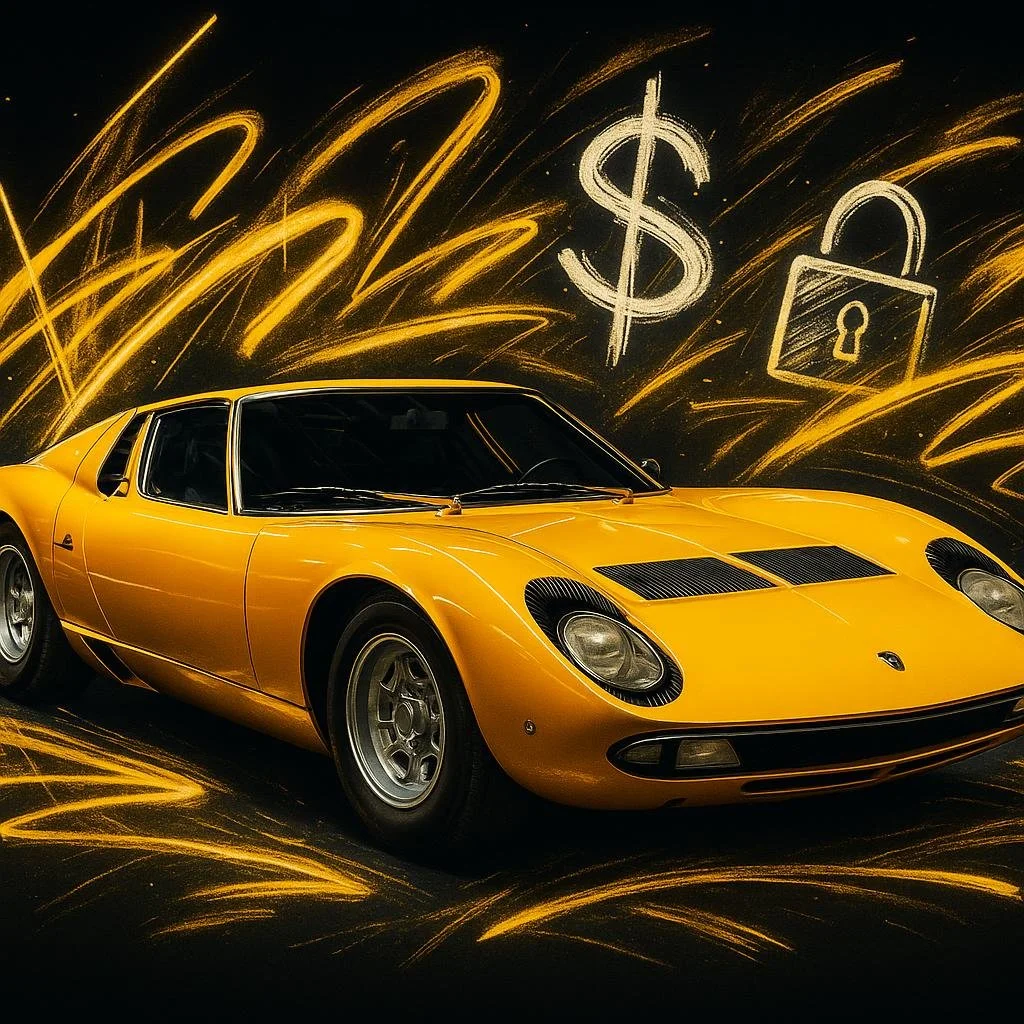
The Lamborghini Miura didn’t just change the game—it invented a whole new one. Its story is a wild ride of rebellion, innovation, and Italian bravado that still echoes through every modern supercar.,
The Lamborghini Miura stands as one of the most important cars ever built, transforming the automotive industry when it arrived in 1966.
The Miura was the first high-performance production road car with a rear mid-engine, rear-wheel-drive layout, a configuration that became the standard for all modern supercars.
At its debut, it claimed the title of fastest production car in the world with a top speed of 280 km/h and could accelerate from 0 to 100 km/h in 6.7 seconds.
The true story behind the Lamborghini Miura development? It’s got everything: bold engineers working after hours, a tractor tycoon with a grudge against Ferrari, and a jaw-dropping debut at the Turin Motor Show.
Technical innovation and pure Italian passion collided, blurring the line between road cars and racing machines. Its influence shaped every supercar that followed—seriously, try to find a modern exotic that doesn’t owe it something.
Let’s peel back the curtain and see how the Lamborghini Miura became the blueprint for modern supercars. We’ll get into the wild engineering, the unforgettable design, and why its value keeps climbing decades later.
Ready to discover the people who built it, what it’s actually like to drive, and why collectors practically worship it? Buckle up.
Origins and Revolutionary Development
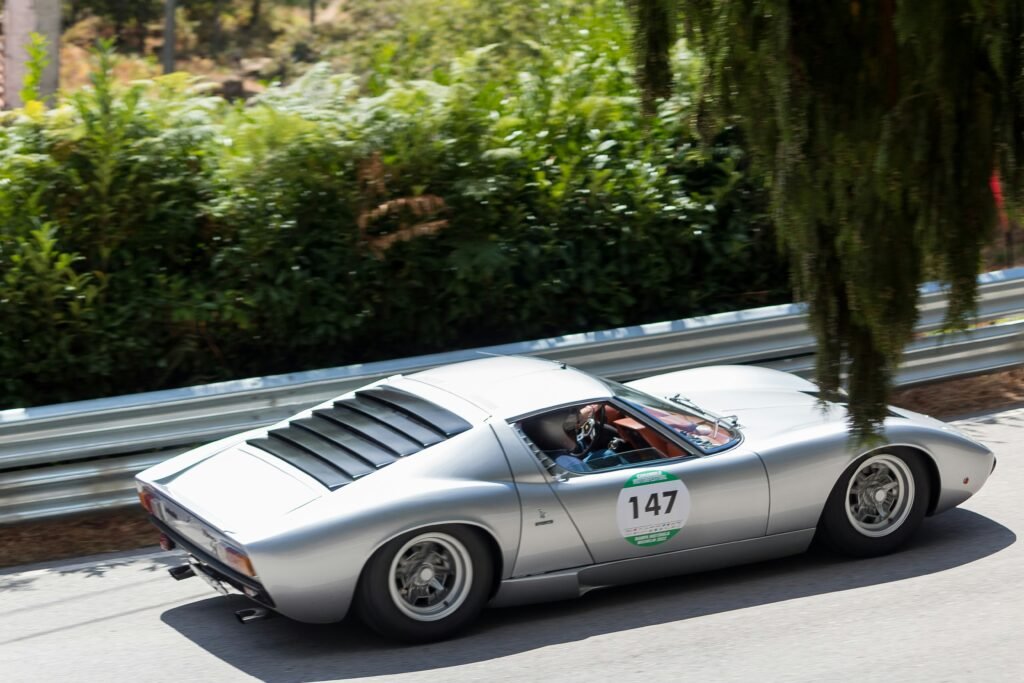
The Lamborghini Miura emerged from Ferruccio Lamborghini’s determination to challenge Ferrari’s dominance. His young engineers had a bold vision for a race-inspired road car.
They didn’t just tweak the formula—they upended it. By putting a V12 engine behind the driver, they created the world’s first mid-engine supercar and set the stage for every supercar that followed.
Ferruccio Lamborghini’s Vision
Ferruccio Lamborghini built his fortune after WWII, turning military vehicles into tractors. Not exactly the typical origin story for a supercar legend, right?
But after some less-than-stellar experiences as a Ferrari owner (let’s just say he and Enzo didn’t see eye to eye), Ferruccio founded Automobili Lamborghini in 1963.
He hired a team of talented engineers to outdo Enzo Ferrari’s best. The 350 GT and 400 GT put Lamborghini on the map with their refined V12 engines and plush interiors.
Ferruccio loved tradition, so he initially pushed back against the wild mid-engine idea. He favored front-engine layouts for road cars, thinking customers wanted comfort over craziness.
But the company’s early wins with those GT cars gave the engineering team some credibility. Ferruccio’s competitive streak and willingness to gamble on big ideas eventually let the Miura project move forward—even if he wasn’t totally convinced it would sell.
Birth of the Miura Project
Three young engineers—Gian Paolo Dallara, Paolo Stanzani, and Bob Wallace—started secretly working on the Miura concept after hours. They didn’t have official approval, just a lot of guts and ambition.
Giotto Bizzarrini’s earlier work on Lamborghini’s V12 engine gave them the perfect starting point for a transverse-mounted powerplant.
They positioned the 3.9-liter V12 sideways behind the seats. It was a move straight out of the racing playbook, but no one had dared to do it in a road car before.
This bold setup delivered 350 horsepower and let the Miura hit roughly 170 mph. Not bad for a machine dreamed up in secret.
Marcello Gandini at Bertone handled the bodywork, sculpting a shape that looked as fast as the car actually was. The teamwork between Lamborghini’s engineers and Bertone’s designers produced something truly unforgettable.
Debut at the Geneva Auto Show
The Miura made its first appearance at the 1966 Geneva Motor Show—but only as a bare chassis. Even so, the technical wizardry turned heads and got people talking.
Bertone finished the bodywork soon after, and the completed car stunned the public later that year. Orders poured in, even though the car was expensive and unproven.
The press called it the blueprint for modern supercars. Its low-slung stance and race-bred engineering were unlike anything else on the road.
The P400 model launched in 1966, with tweaks for handling and stability. Lamborghini later introduced the P400S (1968–1971) and the ultimate P400SV (1971–1973), which cranked things up to 385 horsepower.
Behind-the-Scenes Stories and World Firsts
The Miura’s origins? Pure passion. The engineers built the prototype on their own time, often burning the midnight oil to chase their vision.
Ferruccio didn’t realize how far they’d gotten until the car was nearly finished. Once he saw the potential, he threw his support behind the project, recognizing how much it could boost Lamborghini’s reputation.
The transverse mid-engine layout was a world first for a production car. No one else had married a V12 with this setup in a road-legal machine. That innovation set the tone for decades of supercar design—just look at Ferrari or Porsche today.
The Miura also used a stressed-member chassis, letting the engine itself add rigidity. With independent suspension at all four corners, the car handled better than any front-engine rival. These breakthroughs set standards for high-performance vehicles everywhere.
Lamborghini built about 760 Miuras from 1966 to 1973. That rarity, plus its historical impact, makes original examples insanely desirable among collectors now. One sold for over $3.5 million at auction in 2020—talk about holding value.
Engineering, Powertrain, and Performance
The Miura’s engineering magic started with its sideways V12 and lightweight construction. This combo didn’t just break records—it rewrote what drivers could expect from a sports car.
V12 Engine Design and Specifications
The Lamborghini Miura packed a 4.0-liter V12 delivering 350 horsepower in the first P400. Gian Paolo Dallara and Paolo Stanzani led the charge, crafting an engine that was both responsive and eager to rev.
Four Weber carburetors kept the twelve cylinders well-fed. The V12 hit peak power at 7,000 rpm, making the tachometer a favorite sight for drivers pushing the redline.
Later versions got even spicier: the Miura S hit 370 hp, and the SV topped out at 385 hp. The SV also separated the engine and gearbox oiling, boosting reliability for those who liked to drive hard.
Transverse Mid-Engine Layout
The Miura was the first high-performance production road car with a rear mid-engine layout. The engine sat behind the driver but ahead of the rear axle, and it was mounted sideways.
This mid-engine setup meant almost perfect weight distribution. The car cornered like nothing else on the road, giving drivers razor-sharp control. Bob Wallace, the test driver, spent endless hours fine-tuning the handling to perfection.
The engine and transmission were built as one compact unit. That saved space and shed weight, making the Miura feel agile and light on its feet. It’s a recipe that nearly every supercar still follows.
Performance Milestones and Driving Dynamics
When it launched, the Miura was the world’s fastest production car—280 km/h (174 mph) flat out, and 0–100 km/h in just 6.7 seconds.
Weighing only about 1,300 kg, it had a power-to-weight ratio that left rivals in the dust. Drivers said it felt nimble, quick to respond, and ready to dance through corners.
The steering gave direct feedback, and the low seating position plus wide stance made the car feel glued to the road. It set a new bar for what a sports car could do.
Innovative Mechanical Features
The Miura’s chassis used a steel platform with tubular frames—strong, but light. Double wishbone suspension at all four corners kept the tires planted and the ride composed.
Ventilated disc brakes on all four wheels delivered serious stopping power. The five-speed manual transmission was bolted directly to the differential in the transverse setup.
Cooling wasn’t easy with a mid-engine V12. Engineers added vents and ducts to keep temps in check. Even the fuel tank’s placement was carefully planned to avoid upsetting the car’s balance as you burned through a tank.
Striking Design, Interior, and Aerodynamics
The Miura’s looks? Absolutely jaw-dropping. Marcello Gandini and Carrozzeria Bertone teamed up, sculpting a profile just 110cm tall—barely higher than a child’s bicycle handlebar.
Inside, you got a blend of racing cues and Italian luxury. The aerodynamics weren’t just for show; every curve and vent had a job to do.
Marcello Gandini and Bertone Collaboration
Marcello Gandini at Bertone dreamed up the Miura’s iconic design in just four months. Not bad for a guy in his twenties.
He broke away from old-school sports car shapes, going for dramatic horizontal lines and a wedge profile. Nuccio Bertone, the boss, played a huge role in refining the look.
Ferruccio Lamborghini and the press fell in love instantly. Even now, more than 60 years later, the Miura still looks fresh and modern—how many cars can say that?
Signature Exterior Elements
The rounded headlights with their quirky eyelashes became a Lamborghini signature. Those lashes were on the P400 and P400 S, but the SV went without them for a cleaner look.
Long, low, and impossibly sleek—the Miura’s front end led to an engine cover that flowed into broad rear arches. Rear window slats looked cool and helped vent heat from the V12.
The SV’s wider arches made room for bigger tires. The car’s ultra-low ground clearance screamed racing pedigree and attitude.


Cockpit Layout and Luxury Features
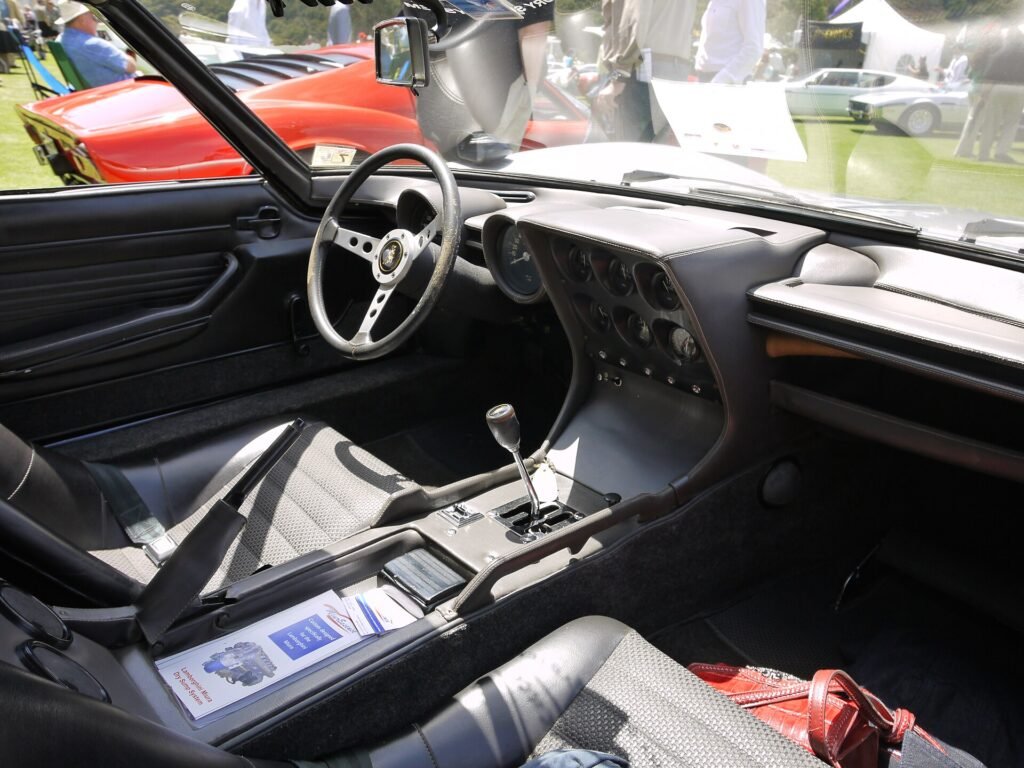
Inside, it’s all about the driver. Two big dials—tach and speedo—dominate the dash, giving you the info you need at a glance.
The P400 S made things a bit cushier than the original, with finer materials and more attention to detail. Still, it never lost that race-car edge.
Everything’s within easy reach, and the seats hug you tight—perfect for carving up a mountain road or just cruising in style. The Miura’s interior proves you can have both passion and polish in one package.Forget everything you think you know about supercars—because the Lamborghini Miura rewrote the rules. If you’ve ever wondered how a single car could ignite a revolution, the Miura’s story is the blueprint, the myth, and the legend, all at once.
Aerodynamic Innovations
The Miura showed the world that beauty and aerodynamics could coexist without compromise. Its low-slung body didn’t just look dramatic—it actually sliced through the air, reducing drag and turning heads at the same time.
Lamborghini’s designers gave the rear window distinctive slats. These weren’t just for show, though; they let hot air escape from the engine bay and added a unique visual twist.
The integrated engine cover managed airflow around the rear, keeping things cool and stable. With a roofline topping out at just 110cm, the car hugged the road and stayed planted even at high speeds.
The Miura’s sleek profile cut wind resistance to the bone. That let its V12 engine really stretch its legs and chase the limits of what was possible in the 1960s.
Variants, Special Editions, and Competitive Landscape
The Miura didn’t stand still. Lamborghini kept evolving it through three main production versions, each time refining performance and adding a dash more magic.
Special one-off builds and racing variants deepened the Miura’s mystique. Meanwhile, it squared off against titans like Ferrari, Ford, and Maserati—talk about a high-stakes rivalry.
Miura S and SV Versions
The original P400, born in 1966, packed 350 horsepower. By 1968, the Miura S (P400S) arrived with 370 horsepower, thanks to beefier carburetors and sharper camshafts.
Then came the Miura SV in 1971, the final and fiercest evolution. It delivered 385 horsepower, wore wider rear fenders for bigger tires, and finally separated lubrication for the engine and gearbox—ending a stubborn oil contamination headache.
Lamborghini also stiffened the suspension and tweaked the wishbones. Later SVs even lost the iconic “eyelashes” around the headlights. Only 150 SVs ever left the factory—scarcity breeds desire, right?
Limited Editions and Unique Models
1968 brought a one-off stunner: the Miura Roadster. This open-top beauty never saw production, but Bertone proved they could do anything with a sketchpad and some metal.
Then there’s the Jota. Lamborghini’s test driver Bob Wallace went wild in 1970, stripping the interior, hacking the bodywork, and tuning the V12 past 440 horsepower. The original Jota met a fiery end, but its legend lives on in a handful of Jota-style conversions.
Don’t forget the Miura SVR—a one-off beast with even more aggressive aerodynamics and weight savings. If the Miura had a “final boss,” this was it.
Miura vs. Contemporary Supercars
The Miura set the gold standard for the rear mid-engine layout. At launch, its 280 km/h top speed made it the fastest production car on Earth. Not bad for a “first try.”
Ferrari’s 275 GTB, with its front-engine layout, could keep up in a straight line but clung to tradition. The Miura’s transverse V12 made for a tighter, more balanced package—something Ferrari didn’t offer until years later.
The Miura bridged racing tech and road manners. Suddenly, a mid-engine supercar wasn’t just for the track—it could rule the street. Lamborghini doubled down on this with the Countach, turning the wild dial up to eleven.
Competitor Highlights: Ford GT40, Ferrari, Maserati
The Ford GT40 was a racing monster, dominating Le Mans from 1966 to 1969. But as a street car? Forget it—too raw, too impractical. The Miura, on the other hand, let you live your supercar dreams every day (if you dared).
Ferrari’s 365 GTB/4 Daytona landed in 1968, matching the Miura’s speed but sticking with a front-engine setup. The Daytona was plush, a grand tourer at heart, while the Miura was pure adrenaline and attitude.
Maserati’s Ghibli brought Italian flair and a brawny V8, but couldn’t touch the Miura’s performance or sheer presence. The Miura cost more and felt rarer—exclusivity always comes at a price.
Market Value, Ownership, and Influence
The Lamborghini Miura’s value has soared in the collector world, and for good reason. It’s not just about the money, though—owning one means joining a rarefied club with its own quirks and challenges. The Miura’s influence on everything that came after? Unmatched, honestly.
Current Price Trends and Investment Value
Fast-forward to 2025, and the Lamborghini Miura sits atop the collector car pyramid. Average prices hover around $1.6 million, but the range is wild: project cars can dip to $150,000, while the best of the best have fetched nearly $4.9 million.
That $4.9 million auction record? Proof that the Miura’s legend is alive and well. It’s the first true supercar, after all, and that pedigree matters.
Value by variant:
- P400: $800,000 – $1.5 million
- Miura S: $1.2 million – $2 million
- Miura SV: $1.8 million – $4.9 million
- Jota: Sky-high, thanks to extreme rarity
The SV and Jota versions always command the biggest bucks. Why? Limited numbers and even wilder performance. Provenance and originality drive prices, too—if you’ve got a car with all the right paperwork and parts, collectors will pay a premium.
As investments go, the Miura’s a blue-chip. Prices climb steadily, not chaotically. It’s a generational icon, and demand never really fades—at least, not so far.
Ownership Costs and Maintenance Insights
Here’s the rub: Miura ownership isn’t for the faint of wallet. Parts can be tough to find since production stopped in 1973.
Annual upkeep runs $15,000 to $30,000 for cars that see the road. That covers basics—fluids, routine service, preventive maintenance. Big jobs (like an engine rebuild) can top $50,000. Ouch.
The V12 sits sideways, which is cool, but it means you need a real expert to work on it. Not every mechanic can—or should—touch a Miura. Most owners stick with Lamborghini specialists or trusted marque experts.
Insurance? Expect $5,000 to $12,000 per year, depending on value and how much you drive. Policies usually cap mileage and require secure, climate-controlled storage. Let’s be honest—these cars don’t see rain.
Original parts are gold. If you need replacements, you’ll pay a premium. Some reproduction parts exist, but originality seriously impacts value when it’s time to sell.
Typical Owners, Community, and Enthusiasts
Who buys a Miura? Not your average gearhead. Most owners are high-net-worth collectors, successful entrepreneurs, or celebrities who want a piece of history in their garage.
Common owner profiles:
- Collectors with deep stables of vintage exotics
- Automotive historians and true enthusiasts
- Investors looking for alternative assets
- Celebrity collectors who crave iconic status
There’s a tight-knit community around the Miura. Owner groups and Lamborghini clubs swap tips, source rare parts, and share restoration stories. They host rallies, concours events, and sometimes just show off at car meets—who could blame them?
Even at decades-old, the Miura draws crowds wherever it goes. Car shows, auctions, museum displays—it’s always the star. Online forums and social media groups keep the global Miura family connected, sharing everything from maintenance headaches to epic road trip photos.
The Miura’s Cultural Impact and Legacy
The Miura didn’t just create a car—it created the supercar category. Its mid-engine layout became the gold standard, copied by every serious player since.
Look at any modern supercar—Ferrari F40, Porsche 918, McLaren F1—and you’ll see the Miura’s DNA. Lamborghini’s 1966 gamble paid off, big time.
The Miura’s star turn in “The Italian Job” (yes, that opening Alpine sequence) cemented its pop culture status. It was everywhere in the ‘60s and ‘70s—movies, music videos, magazine covers. If you wanted to look rich and fast, you needed a Miura.
Designers and journalists still reference the Miura as a turning point. “The car that changed everything” isn’t just hype—it’s the truth. Even rivals grudgingly admit it shifted the entire industry’s direction.
Today’s supercars still borrow from the Miura’s playbook: wild styling, massive power, and race-bred engineering, but made street-legal. The Miura proved people would buy mid-engine exotics, even if the old guard doubted it.
Driving Experience, Reviews, and Lasting Reputation
Driving a Miura isn’t just a trip—it’s an event. The blend of raw mechanics and surprising refinement still blows people away. Owners and critics alike rave about the experience, quirks and all, and the car’s reputation just keeps growing.
Test Drive Impressions
Behind the wheel, you’re part of the machine. The V12 sits right behind your head, howling at high revs and making the cockpit vibrate. Every input—steering, throttle, brakes—feels direct and alive.
The mid-engine layout changes everything. The Miura darts into corners and stays balanced, unlike the nose-heavy grand tourers of its era. Some early cars get a bit floaty up front at high speeds, though—above 150 mph, you’ll need a steady hand.
Visibility isn’t great. The low seats and chunky rear pillars create blind spots, and parking can be a heart-stopper. The big rear window helps, but confidence is a must.
Shifting through the gated manual is a tactile joy. Gears slot home with a metallic snick, though the clutch feels heavy and throws are long by modern standards. It’s a workout, but a satisfying one.
Media Reviews and Notable Quotes
Back in the day, the Miura’s looks and speed stunned reviewers. Road & Track called it “more mythical figure than car”—and it’s hard to argue. The proportions, the drama, the sheer nerve of it all—it was something new under the sun.
Ferruccio Lamborghini himself summed it up: “the Miura is for the keenest sporting driver who wants the ultimate in looks and performance.” That duality—beauty and brawn—made the Miura a unicorn.
The SV model got the loudest applause. With a wider rear track and better suspension, it fixed most of the early car’s handling quirks. For many, it’s the Miura to have.
But it wasn’t perfect. Cabin heat from the transverse V12 could turn the interior into a sauna. Owners just learned to live with it—or sweat in style.
Awards, Records, and Enduring Accolades
The Miura grabbed the world’s attention as the first supercar and the fastest production car in 1966. Lamborghini claimed 198 mph—maybe optimistic, but it sure made headlines and rattled Ferrari’s cage.
No one had ever built a production car with race-inspired, mid-engine architecture and such jaw-dropping looks. The Miura’s Geneva Motor Show debut in 1966 completely overshadowed Ferrari’s new 330GTC. Suddenly, Lamborghini was a real threat to Maranello’s throne.
Today, collectors and historians routinely rank the Miura among the most important cars ever built. Its influence goes way beyond numbers—this is a car that changed minds, hearts, and the entire trajectory of automotive history.
The Miura in Popular Culture
The Lamborghini Miura didn’t just change the supercar game—it became a legend that set the world on fire. Even now, you can’t mention iconic cars without picturing that low, wild silhouette.
The Miura burst onto the scene in the opening sequence of The Italian Job (1969). That bright orange P400, carving through the Alps, instantly burned itself into the public’s imagination—showcasing both style and raw power.
Musicians, actors, and the glitterati couldn’t resist. Frank Sinatra, Miles Davis, and other big names snapped up Miuras, turning the car into a symbol that stretched far beyond car culture.
Honestly, it’s hard to overstate how much the Miura’s design shaped the future. The low nose, that predatory stance, those dramatic lines—they all became inspiration for generations of supercars. Even today’s Lamborghinis tip their hats to Marcello Gandini’s original vision.
Auctions tell the story too. Well-kept Miuras regularly sell for over $2 million. Original SV models? They’ve crossed $3 million, which says a lot about lasting demand and the car’s mythic status.
Final Words
The Lamborghini Miura didn’t just arrive—it exploded onto the scene, redefining speed, style, and ambition. Engineers’ daring, Gandini’s design genius, and Ferruccio’s vision fused into a car that became the blueprint for modern supercars. Even decades later, its roar, curves, and legacy still ignite hearts and imaginations worldwide.
Thanks for reading! If you enjoyed this deep dive, be sure to subscribe to my email list for exclusive car reviews, insider tips, and weekly special offers on car parts, auctions, and gear — perfect for any car enthusiast.
If you have any thoughts or experiences with this car? Leave a comment below — I love hearing your opinions and sparking conversations with fellow enthusiasts.
And don’t forget to read related posts for more great content!