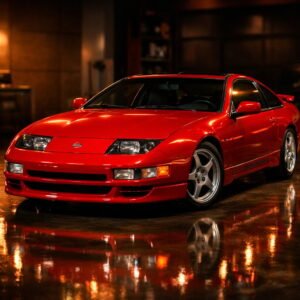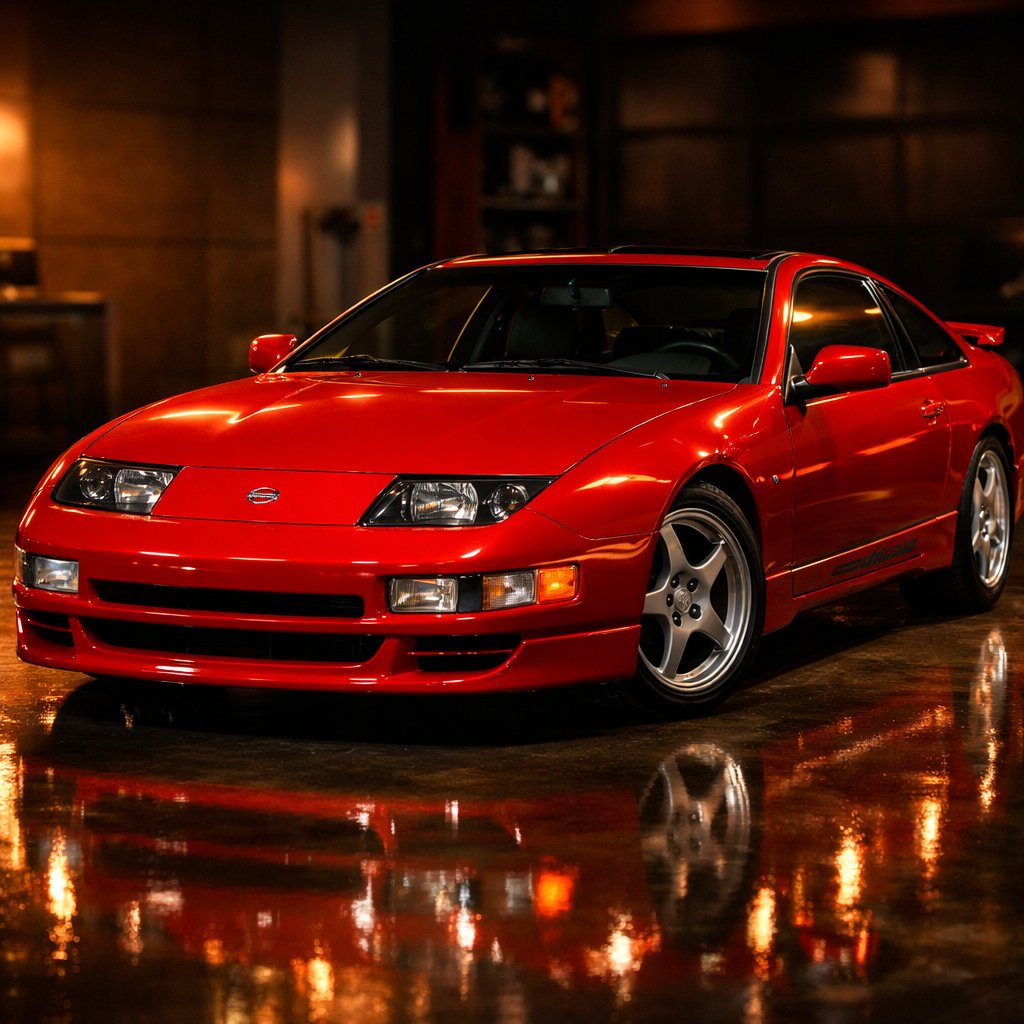
There’s something about the Nissan 300ZX Twin Turbo that feels different from the rest of the 1990s Japanese sports car lineup. The Z32-generation Twin Turbo now trades between $30,000 and $50,000 for decent driver examples, with truly low-mileage cars hitting $60,000 to $75,000 at auction.
That’s still well below comparable German alternatives, but the fundamentals here are stronger than many of its era’s competitors. The 300ZX Twin Turbo’s investment case is built on limited production, technical significance, and its status as the last analog Japanese grand tourer before electronics took over.
From 1990 to 1996, Nissan produced about 80,000 Z32s for North America, with Twin Turbo models making up roughly 40% of that. Notably, this car brought variable valve timing, four-wheel steering, and a 300-horsepower rating—beating out Porsches of the time.
Market data shows a 45% appreciation over the past five years. That’s ahead of inflation, though not as hot as some Japanese icons. Mechanical complexity is both a draw and a risk: the 300zx twin turbo’s engineering is impressive, but it’s also where the headaches (and bills) start stacking up.
What Are the Key Investment Metrics?
The Nissan 300ZX Twin Turbo is a moderate-risk entry into the Japanese sports car market. Values are already climbing for clean examples, but buying in isn’t simple or cheap.
Here’s how the numbers shake out:
- Production Volume: 80,432 Z32 chassis globally (U.S. market 1990-1996); Twin Turbos make up about 35%-40% of that.
- Current Valuation: Clean, documented Twin Turbos range from $25,000 to $60,000. The best low-mileage cars in 2026 are pushing higher.
- Appreciation Rate: Top examples have shown 8-12% annual appreciation over five years, outperforming both naturally aspirated Z32s and the Z31.
- Primary Risk: The VG30DETT engine is complex and expensive to maintain. A timing belt service at 120,000 miles costs $2,000-$3,000.
- Market Position: The 300zx tt sits below the Supra Turbo and RX-7 FD in collector desirability, but it’s a better bet than non-turbo Z32s or most Z31s.
If you’re buying, documentation and condition are everything. Cars without service records get devalued immediately, and the market could shift if the 1990s JDM craze cools off.
How Does the 300ZX Twin Turbo Stack Up in Today’s Market?
The Nissan 300zx twin turbo Z32 has seen a dramatic shift in the collector market. Clean examples now command prices that reflect a new level of respect for the platform’s engineering.
Values depend heavily on condition, mileage, and originality. The difference between a driver and a near-museum piece has widened a lot since 2020.
Where Is Collector Demand Focused?
In the last five years, the Z32 Twin Turbo went from an affordable enthusiast car to a legitimate collectible. Hagerty’s valuation data confirms the 1990-1996 Twin Turbo is the star of the lineup.
Most demand centers on 1993-1996 models, which have better interiors and engine management. There’s an older crowd chasing nostalgia, and a younger group looking for an attainable icon, especially since the Supra and NSX are now out of reach.
What Are Current Sale Prices?
Bring a Trailer sales from 2023-2026 show driver-quality Twin Turbos with 80,000-120,000 miles and some cosmetic flaws trading at $28,000-$38,000. Well-kept cars with 40,000-70,000 miles and full records usually bring $42,000-$58,000.
Truly exceptional examples—under 30,000 miles, original paint, all the paperwork—have hit $68,000 to $82,000 at auction. The high watermark is a 1994 Twin Turbo with 11,000 miles that brought $85,000 in late 2025.
Private sales tend to be 8-12% lower than auction results, unless the car is unusually well-documented.
How Much Do Condition and Documentation Matter?
Original paint adds a 15-20% premium over resprayed cars, since it’s proof the car hasn’t been in trouble. Service records for timing belt and nissan 300zx turbos maintenance add 10-15% to the price.
Stock cars are worth much more than modified ones, even if someone spent $15,000 on upgrades. Single or two-owner history with full documentation can add $1,500-$3,000 to the sale price for top cars.
How Scarce Is the 300ZX Twin Turbo?
The Z32 300ZX was built from 1989 to 2000, but the twin turbo was always a smaller slice of the total. Actual scarcity depends on market, year, and how many have survived 30 years of use (and abuse).
What Were the Real Production Numbers?
Roughly 80,000 Z32 chassis were built worldwide. The U.S. got about 60% of that, Japan 25%, and Europe the rest. The twin turbo (VG30DETT, 300 hp) was always the flagship over the naturally aspirated version.
Production peaked in 1990-1991 and dropped fast. By 1996, only about 3,000 cars a year were being built globally.
How Many Twin Turbos Were Actually Built?
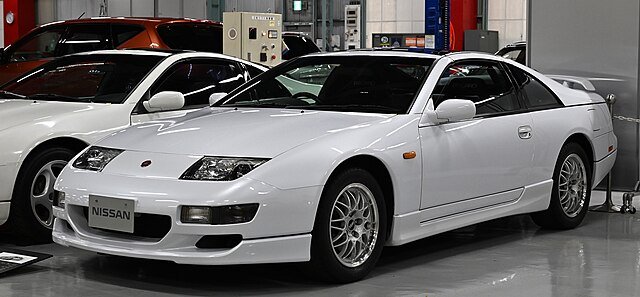
The twin turbo made up about 40% of Z32 production—roughly 32,000 units worldwide. Most were the short-wheelbase 2-seater. Convertibles are rare: just 1,672 built from 1993-1996 for all markets.
In the U.S., 1990 was the big year with about 5,000 twin turbos sold. By 1994, fewer than 2,000 came here. JDM models had slightly more boost and different emissions equipment.
How Many Survive—and in What Shape?
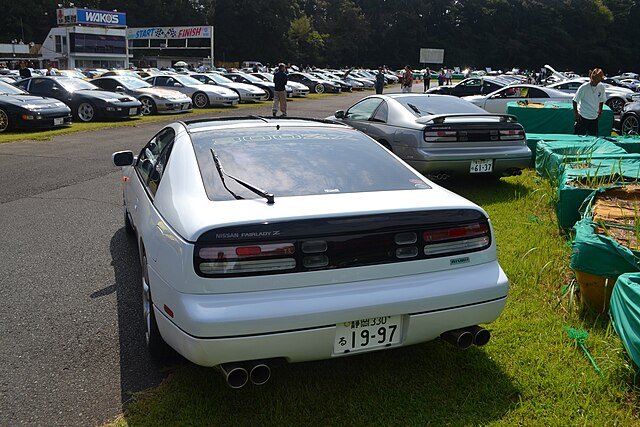
Less than half of all 300zx twin turbos are likely still on the road. Engine complexity and deferred maintenance have killed off thousands. Many were modified badly or lost to cooling failures.
Best guess: 12,000-15,000 twin turbos still run worldwide. Maybe 3,000 are truly collector-grade—original, documented, and clean. Fewer than 5% have under 50,000 miles.
How Has the 300ZX Twin Turbo Appreciated Over Time?
The 300ZX Twin Turbo has been on a steady upward trend since bottoming out in the mid-2010s. Clean cars have doubled in value in a decade, but the big money has gone to the very best examples.
What Does the Value History Look Like?
Here’s a quick breakdown of pricing since launch:
| Year | Condition #2 Value | Condition #1 Value | Notes |
|---|---|---|---|
| 1990 | $33,000 (MSRP) | N/A | Launch price |
| 1995 | $20,000 | $24,000 | Five-year point |
| 2000 | $10,000 | $15,000 | Depreciation floor |
| 2015 | $18,000 | $28,000 | Market stabilization |
| 2026 | $32,000 | $55,000 | Current market |
#1 and #2 condition cars are up 125% and 37% since 2011. From the 2000 low to 2026, annualized return is about 6.8% for condition #2 cars.
How Does It Compare to Other Investments?
The S&P 500 did about 8.2% annually from 2000-2026, so equities have outperformed the 300ZX. If you bought at the 2015 low and held through 2026, you’d see 5.5% annual returns versus 10.1% for stocks.
The 300ZX twin turbo lags the Supra Twin Turbo and Acura NSX in both returns and collectability. Hagerty’s indexshows the 300ZX trailing the broader Japanese sports car market by 1.8% per year since 2015.
Cars with poor documentation or heavy mods barely appreciated. The gap between top and bottom condition cars is now over 150%—a warning for anyone looking at a rough example.
What About Turbo Repair and Maintenance Costs?
Here’s where reality bites: the cost of turbo repair on the 300zx twin turbo is not for the faint of heart. A basic turbo rebuild can run $3,000-$5,000, and that’s if you catch problems early.
Major engine-out services (timing belt, water pump, hoses) routinely cost $2,500-$4,000 at a specialist. Factor in $1,000+ for a new clutch, and you’re deep into five figures if you want a trouble-free car.
Parts availability is still decent, but some unique Z32 items are becoming rare and expensive. If you’re not comfortable paying for preventative maintenance, this isn’t the car for you.
Where’s the investment upside?
In my opinion, the Nissan 300ZX TT still has headroom, especially for the rarest, best-documented cars. Japanese classics are gaining traction with younger collectors, and the 300ZX twin turbo sits right at that intersection of performance, design, and nostalgia.
If you’re thinking long-term, prioritize originality and maintenance. Turbo repair costs are real, but they’re manageable if you plan ahead. The best cars will always find buyers—sometimes faster than you’d expect.
Frequently Asked Questions
Potential buyers and collectors keep asking the same things: What’s a fair price for a clean 300zx tt? How rare are these cars, really? What’s the outlook for appreciation compared to the Supra or RX-7? And is the cost of turbo repair justifiable given the current market?
In my view, the 300ZX Twin Turbo is still undervalued relative to its tech and rarity. But you have to buy the right car, and you need to budget for real maintenance. If you want an investment with upside and you appreciate beautiful, complicated machines, there’s a strong case here—but it’s not a hands-off proposition.
What’s the Real Market Value of a Nissan 300ZX Twin Turbo Right Now?
Today, a pristine Nissan 300zx twin turbo with full documentation typically trades between $45,000 and $75,000 in North America. If we’re talking about a 1996 Commemorative Edition with ultra-low miles and a complete paper trail, prices can hit $90,000—sometimes even a bit higher, though that’s rare.
Standard, non-commemorative 300zx tt models in excellent, unmodified condition usually land in the $35,000 to $50,000 range. These are cars with original paint and full service records—no sketchy history, no questionable mods.
Condition really matters. A good car with a few cosmetic flaws can be $10,000 to $15,000 cheaper than a pristine one. If a 300zx twin turbo needs mechanical work or has been heavily modified, expect it to go for $20,000 to $30,000. I think that’s fair, but it means opportunity if you’re willing to take on a project.
Does the Rarity of the Nissan 300ZX TT Actually Boost Its Investment Potential?
Rarity is a big deal here. The Z32 twin turbo was never mass-produced like some of its peers. U.S. production numbers were pretty modest from 1990 to 1996, especially compared to other sports cars of that era.
Attrition is a real issue. Many nissan 300zx turbos have been lost to poor maintenance or wild modifications—basically, they’re off the table for collectors. So, cars with original specs and solid documentation are scarce, and that’s reflected in pricing.
Final-year 1996 models, especially the Commemorative Edition (just 300 units), show how scarcity drives value. The strong yen in ’96 pushed prices up, so not many were sold. If you’re after something truly rare, that’s the one to chase.
How Does Limited Production Affect the 300ZX Twin Turbo’s Collectibility?
Low production numbers mean more competition for the best examples. The twin turbo cars were always built in smaller numbers than the naturally aspirated models, making them more desirable for collectors.
If you want a manual, prepare to pay more. Manuals make up a smaller slice of the pie and fetch 15% to 25% premiums over automatics. Most enthusiasts—including me—see manuals as the better investment.
Some Japanese Domestic Market (JDM) cars have trickled into the U.S. These right-hand drive imports add a bit of variety, and a few collectors really go for them, though they’re still a minority.
What Have Prices Actually Done Over Time for the Nissan 300ZX Twin Turbo?
Like most used sports cars, the Z32 twin turbo went through a big depreciation phase. By 2005-2008, you could grab a clean one for $8,000 to $15,000. Wild, right?
Things changed after 2015, as ’90s Japanese cars started getting real collector attention. From 2015 to 2020, clean twin turbos jumped by 12% to 18% a year. That’s a serious run-up.
Since 2020, prices have cooled a bit, rising about 4% to 7% annually for standard cars. The rarest, best-documented examples are still outperforming the rest. In my view, the market’s maturing, but there’s still room for upside, especially for low-mileage cars.
| Year | Average Value (Clean TT) | Annual Appreciation |
|---|---|---|
| 2008 | $12,000 | – |
| 2015 | $18,000 | ~7% |
| 2020 | $35,000 | ~15% |
| 2024 | $45,000 | ~6% |
How Does the 300ZX TT Stack Up as an Investment Compared to the Nissan GT-R?
The R32, R33, and R34 GT-Rs are in a different league price-wise. R32 GT-Rs go for $75,000 to $150,000. R33 and R34 models? $100,000 to $300,000, depending on spec.
Part of the gap is production volume, but the GT-R also has a racing pedigree the 300zx twin turbo doesn’t. The Z32 was built as a grand tourer, not a homologation special.
If you’re looking for value upside, the 300zx tt is arguably the smarter play. GT-R prices are already sky-high, and unless you’re buying a unicorn, there’s less room for appreciation. The Z32, especially in top condition, still has headroom—at least, that’s my take.
What Are the Key Costs and Risks for 300ZX Twin Turbo Ownership?
One thing that can’t be ignored: the cost of turbo repair. If you buy a 300zx twin turbo with tired turbos, expect a bill of $3,000 to $6,000 for a proper rebuild or replacement. Parts aren’t always easy to find, either.
Maintenance is critical. Deferred service kills values. If you’re investing, pay up for a car with a thick folder of records—it’s worth it, both for peace of mind and future resale.
Actionable Insights: Should You Invest in a Nissan 300ZX Twin Turbo?
From where I sit, the 300zx twin turbo is a compelling investment if you pick the right car. Focus on condition, originality, and documentation. Manuals and commemorative editions are the best bets for long-term appreciation.
Don’t ignore the cost of turbo repair or the risk of deferred maintenance. Buy the best you can afford, and if you find a truly unmolested example, hold on tight. These cars aren’t getting any more common, and the market still has room to grow.
What matters most for a long-term investment in the Nissan 300ZX Twin Turbo?
First off, documentation is absolutely critical. Cars with full service records, original window stickers, and a clear ownership trail always stand out. That documentation premium only grows as these cars get older.
Specification choices can make or break future appreciation. If you’re looking at a Nissan 300ZX TT, the manual transmission is a must for collectors. Factory colors outside of the usual silver and black—think yellow, red, or even the rare pearl white—tend to attract stronger bids. Late-production years are scarce and, in my view, carry the most upside. Convertibles? They’re a niche play, and honestly, they don’t move in lockstep with coupes.
How do maintenance and storage affect investment returns?
Maintenance isn’t just a detail—it’s the backbone of investment quality. The VG30DETT engine needs a timing belt every 50,000 miles. Skip it and you risk catastrophic engine failure. I’ve seen cars lose five figures in value overnight due to deferred maintenance, no matter how shiny the paint looks.
Proper storage is just as important. Indoor, climate-controlled environments help protect both cosmetics and mechanicals. Neglect either, and you’re basically burning money.
Is now a good time to buy a 300ZX Twin Turbo?
Right now, prices for the Nissan 300ZX Twin Turbo reflect solid collector interest, but we’re not in bubble territory. I’d argue it’s smarter to focus on getting the best example you can afford—don’t try to predict short-term market swings. The top-spec, low-mileage cars are already separating themselves from the pack.
What are the real costs of turbo repair and ownership?
Nissan 300ZX turbos are robust, but turbo replacement or overhaul isn’t cheap. Expect labor and parts to run $3,000–$5,000 for both turbos at a reputable shop. OEM parts are getting harder to source, and that’s starting to show in repair bills.
Annual maintenance, assuming you’re not daily-driving, lands around $1,000–$1,500 if you keep up with fluids, belts, and minor fixes. Skip scheduled maintenance, and you risk much bigger expenses down the line.
| Expense | Estimated Cost (USD) |
|---|---|
| Turbo Overhaul (Pair) | $3,000–$5,000 |
| Timing Belt Service | $1,200–$1,800 |
| Annual Maintenance | $1,000–$1,500 |